2026 Best EV Charging Load Balancing Guide?

Time:2026-10-11 Author:Madeline
0%

Electric vehicle adoption is moving faster than many charging sites can expand their electrical capacity. The IEA’s Global EV Outlook 2025 reported more than 17 million electric cars sold worldwide in 2024. Electric cars represented over 20% of new-car sales. Public charging infrastructure must now serve larger, less predictable demand.

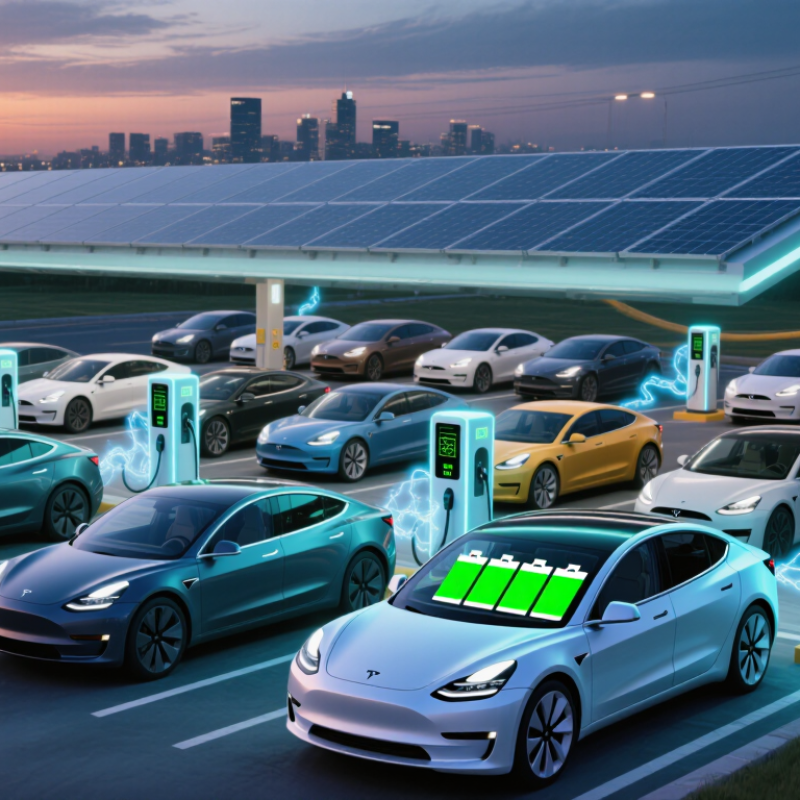
A multi-EV park can expose this problem quickly. Imagine 32 vehicles arriving after work, with several demanding 150 kW simultaneously. Without control, a site may exceed its transformer limit, trigger costly demand charges, or slow every vehicle. NREL research has repeatedly identified unmanaged charging as a contributor to new electricity peaks. NREL grid researcher Michael Kintner-Meyer described the risk plainly: “Unmanaged charging can create a new peak demand.”

How does load balancing work in multi-EV charging parks? The system measures available site capacity, vehicle state of charge, departure times, and charger power. It then distributes electricity dynamically. One vehicle may receive 120 kW, while another temporarily receives 40 kW. When the first vehicle reaches its target, unused capacity shifts automatically. Simple in theory.

Real projects are messier. Drivers rarely enter accurate departure times. Batteries accept power differently in cold weather. Solar output can fall within minutes. The IEA’s Global EV Outlook 2024 also noted that public chargers had surpassed four million globally by the end of 2023. That scale makes intelligent control increasingly important, not optional.

This 2026 guide examines site limits, dynamic load balancing, smart charging software, battery storage, and operational safeguards. The goal is practical: keep vehicles moving without treating the electrical grid as unlimited.
2026 Best EV Charging Load Balancing Guide?

EV Charging Load Balancing: Definition, Purpose, and Core Principles

2026 Best EV Charging Load Balancing Guide?

EV Charging Load Balancing: Definition, Purpose, and Core Principles

Load balancing controls how available electrical power is shared among charging vehicles. It adjusts charging output as demand changes. A home, workplace, or fleet depot may have a fixed service limit. Several vehicles can exceed it within minutes. Without control, breakers may trip, cables may heat, or costly upgrades may become necessary. The system measures building consumption and allocates remaining capacity to chargers. Clear priorities matter.

A sound design starts with the site's real electrical profile. Review the main service rating, peak loads, cable capacity, and charging schedules. For example, 60 amps of spare capacity cannot safely support four 32-amp chargers at full output. Dynamic balancing reduces charging power when ovens, lifts, or heat pumps consume more electricity. It restores capacity when those loads fall. Static balancing uses a preset limit, while dynamic balancing responds to live measurements. Both can work.

Core principles include safety, measurement, fairness, and resilience. Keep a reserve instead of using every available ampere. Give priority to urgent fleet vehicles when operations require it. Avoid starving one vehicle indefinitely. Communication failures need a defined fallback mode. Charging should reduce safely, not stop unpredictably. Testing under worst-case demand is essential. Real sites are messier than diagrams. Meter errors, unexpected visitors, and seasonal loads can challenge assumptions. A cautious engineer should revisit settings after occupancy changes. Perfect balancing is unlikely. Reliable balancing is achievable.

How EV Charging Load Balancing Systems Measure and Manage Demand

2026 Best EV Charging Load Balancing Guide?

How EV Charging Load Balancing Systems Measure and Manage Demand

EV charging load balancing starts with measurement. Sensors monitor current at the main electrical panel, while the charging controller tracks each vehicle’s power draw. The system compares total demand with the site’s safe capacity. If several vehicles begin charging after dinner, available power can shrink quickly. The controller then reduces charging rates or delays selected sessions. This prevents overloads without requiring a larger electrical connection. In practice, accurate sensor placement matters. A small installation error can produce misleading readings.

Many systems use dynamic thresholds rather than fixed charging schedules. They consider building loads, circuit limits, charging priorities, and sometimes solar production. For example, a vehicle may receive full power when the building is quiet. It may receive less power when heating equipment starts. Load balancing can also distribute current across electrical phases, improving stability in multi-phase installations. However, the process is not flawless. Communication delays, unusual appliance behavior, or incomplete vehicle data can affect decisions. Site testing remains essential.

Tips: Confirm the panel rating, sensor direction, and emergency limits before commissioning. Test several charging patterns, including simultaneous starts. Keep a manual override available, but restrict access. Review energy data after installation. Real usage often differs from design assumptions. A system that looks efficient on paper may need adjustment during cold weather, busy business hours, or future charger expansion.

2026 Best EV Charging Load Balancing Guide? - How EV Charging Load Balancing Systems Measure and Manage Demand

Load-Balancing Dimension What the System Measures How Demand Is Managed Typical Data or Operating Range Practical Benefit
Total Site Power Real-time active power imported by the building and EV chargers, measured in kilowatts. The controller compares measured demand with the configured site power limit and reduces charging power when the limit is approached. 0 kW to the site’s electrical-service capacity; the limit is normally set below the maximum permitted demand. Helps prevent service overloads and reduces the need for costly electrical upgrades.
Voltage and Current Line voltage and current on each monitored phase or circuit. Charging current is increased, maintained, or curtailed to keep circuit loading within the configured electrical rating. Common AC charging levels include approximately 3.7 kW, 7.4 kW, 11 kW, and 22 kW, depending on voltage, phase configuration, and current rating. Provides circuit-level protection and supports safer charging across multiple vehicles.
Phase Balance Current and power on each phase of a single-phase or three-phase electrical supply. The system assigns chargers across available phases or limits selected chargers when one phase becomes more heavily loaded. Three-phase installations are commonly monitored phase by phase rather than only by total kW. Reduces phase imbalance, nuisance trips, and uneven utilization of electrical capacity.
Connected Charging Load The number of active EV charging sessions and the power currently requested by each session. Available capacity is divided among active vehicles using fixed sharing, priority-based allocation, or an equal-share algorithm. For example, a 40 kW site limit may be shared among four vehicles at up to 10 kW each, subject to vehicle and charger limits. Allows more vehicles to charge without requiring every charger to operate at full rated power.
Charging Priority Vehicle departure time, required energy, user priority, fleet duty cycle, or service-level requirements. Higher-priority vehicles receive more power or earlier charging windows, while flexible sessions are temporarily throttled. Priority rules may be based on estimated departure time, minimum state of charge, or operational importance. Improves the likelihood that critical vehicles are ready when needed.
Energy Requirement Energy delivered in kilowatt-hours, charging duration, and, when available, vehicle state of charge. The scheduler calculates the power needed to meet a target energy amount before the planned departure time. Required energy depends on battery size, present state of charge, vehicle efficiency, and charging losses. Prevents unnecessary maximum-rate charging and improves use of overnight or low-demand periods.
Demand Threshold The difference between measured demand and the configured maximum site or circuit demand. A reserve margin is maintained so the controller can respond before the limit is exceeded. A site may use a configurable threshold below the service rating; the exact margin depends on local code, equipment, and operating conditions. Reduces overshoot caused by measurement delay, load fluctuations, or simultaneous equipment starts.
Control Response The interval between a change in measured load and a charging-power command. The controller updates charging setpoints at regular intervals and may use staged reduction instead of an immediate full shutdown. Response time depends on the meter, communications network, charger protocol, and controller configuration. Supports stable operation while avoiding unnecessary interruptions to charging sessions.
Static Load Balancing A fixed current or power allocation assigned to each charger or charging group. The available capacity remains fixed regardless of the building’s changing consumption. Useful where the site load is predictable and the electrical limit is known. Simple to design and operate, but it may leave capacity unused during periods of low building demand.
Dynamic Load Balancing Real-time building load, EV load, circuit current, phase conditions, and configured limits. Charging power rises when spare capacity is available and falls when other electrical loads increase. The usable charging capacity changes continuously within the site’s approved electrical envelope. Maximizes charger utilization while protecting the electrical infrastructure.
Time-of-Use Scheduling Time periods, electricity tariffs, site demand patterns, and vehicle availability. Charging is delayed or increased according to lower-cost periods while still respecting departure and energy requirements. Schedules vary by utility territory and tariff; they must be verified against the applicable electricity plan. Can reduce energy costs and help avoid coincident peak demand.
Safety and Fallback State Meter communication status, charger connectivity, abnormal current, voltage conditions, and controller alarms. If measurements or communications fail, the system applies a predefined safe current limit or stops affected charging circuits. Fallback behavior must be configured and validated during commissioning. Maintains predictable protection during sensor, network, or controller failures.

Note: Actual limits and settings must be confirmed by a qualified electrical professional and adjusted to the local electrical code, utility requirements, charger specifications, meter accuracy, and site operating profile.

Choosing the Best Load Balancing Method for Different EV Charging Sites

The best EV charging load balancing method depends on the site, not only the charger rating. The International Energy Agency’s Global EV Outlook 2024 reports more than 40 million electric cars on the road at the end of 2023. Public charging points also exceeded four million worldwide. This growth makes unmanaged charging risky for older electrical systems.

For homes and small offices, static load balancing is usually enough. It shares spare capacity when other appliances operate. Apartment buildings need dynamic balancing across many vehicles. A site energy management system can protect the main connection and distribute power by charging priority. Fleet depots require a smarter approach. Departure time, battery state, route distance, and tariff periods should guide charging schedules. The U.S. Department of Energy notes that managed charging can reduce peak demand and improve grid flexibility. Still, results depend on accurate user data. That part is often messy.

Tips: Measure the site’s real load for at least seven days. Set a reserve margin before adding vehicles. Give emergency vehicles higher priority. Review the control rules monthly. Do not trust theoretical capacity alone. The National Renewable Energy Laboratory highlights that charging demand varies sharply by location, time, and vehicle use. Highway sites may need fixed high-power allocation, while workplaces can tolerate slower overnight charging. No method is perfect. A field test may reveal uncomfortable assumptions.

Step-by-Step Guide to Planning and Installing a Load Balancing System

2026 Best EV Charging Load Balancing Guide?

Step-by-Step Guide to Planning and Installing a Load Balancing System

Electric vehicle charging is becoming an electrical planning challenge. The IEA’s Global EV Outlook 2024 reported more than four million public charging points worldwide at the end of 2023, up about 40% in one year. A load balancing system helps distribute available power when several vehicles charge together. It can prevent nuisance trips, reduce expensive service upgrades, and protect other building loads.

Begin with a site survey. Record the main breaker rating, cable routes, solar generation, heating equipment, and likely charging demand. Then calculate the building’s realistic peak load, not only its average use. The 2030 National Charging Network report from NREL estimates that the United States may need about 28 million charging ports by 2030. That scale makes poor planning costly.

Choose static or dynamic balancing. Static control assigns a fixed limit to chargers. Dynamic control uses current transformers or a smart meter to measure the building continuously. Install the sensors upstream of the charging circuits, confirm their direction, and configure charging priorities. Test difficult moments: morning heating, kitchen equipment, and every vehicle starting together. Keep a safety margin.

Do not trust the first calculation. Occupancy patterns change. Firmware can fail. Review energy logs after installation, then adjust limits with qualified electrical professionals and applicable standards. A neat spreadsheet is useful, but real measurements deserve the final vote.

2026 Standards, Smart Features, Costs, and Future Developments

2026 Best EV Charging Load Balancing Guide?

2026 Standards, Smart Features, Costs, and Future Developments

Electric vehicle charging is becoming a grid-management issue, not merely a parking service. The IEA’s Global EV Outlook 2024 reported more than four million public charging points worldwide at the end of 2023. It also recorded over 1.3 million new public points that year. Load balancing will become essential as apartment blocks, workplaces, and highway sites add simultaneous chargers.

Reliable systems should support ISO 15118-20, IEC 61851, and OCPP 2.0.1. These standards improve communication, authentication, monitoring, and charging control. Smart features include dynamic power sharing, scheduled charging, solar coordination, and demand-response signals. NREL research shows that managed charging can reduce coincident peak demand, although results depend on local tariffs, driver behavior, and network limits. The technology is useful. It is not magic.

Installation costs vary sharply. Hardware may be predictable, but trenching, switchgear, permits, transformer upgrades, and demand charges can dominate the budget. BloombergNEF’s Electric Vehicle Outlook 2024 indicates that charging infrastructure investment must grow substantially alongside global EV adoption. A practical design should measure feeder capacity before selecting charger quantities. Too many chargers can create an expensive bottleneck. Too much software can also frustrate drivers. Future systems may combine vehicle-to-grid services, battery buffering, and AI forecasting, yet interoperability remains imperfect. Standards evolve slowly, while fleets expand quickly.

FAQS

What does an EV charging load balancing system do?

It distributes available electrical capacity among chargers and other building equipment. This helps prevent breaker trips during busy periods. It does not create extra power.

What should be checked before installation?

Survey the main breaker, feeder cables, cable routes, solar output, heating, and expected vehicle demand. Record morning peaks, not only average consumption. Real measurements matter.

How are static and dynamic balancing different?

Static balancing gives chargers a fixed shared limit. Dynamic balancing measures building demand continuously through sensors or a smart meter. It can respond when heating or kitchen equipment starts.

Where should current sensors be installed?

Place sensors upstream of the charging circuits, following the approved electrical design. Confirm their direction before commissioning. A reversed sensor can produce wrong control decisions.

How many chargers can a site support?

The answer depends on feeder capacity, charger power, building demand, and the safety margin. Ten parking spaces do not automatically mean ten full-power chargers. The spreadsheet may be wrong.

Which smart functions can improve charging management?

Useful functions include scheduled charging, solar coordination, demand-response control, and shared power limits. Communication standards can improve monitoring and charger coordination. More software is not always better.

What installation costs are easy to underestimate?

Trenching, switchgear, permits, transformer work, and demand charges can exceed hardware costs. A short cable route may still require major electrical changes. Budget conservatively.

How should the system be tested after installation?

Review energy logs and test difficult operating conditions. Start heating, kitchen equipment, and all vehicles together during a controlled test. Adjust limits with qualified electrical professionals and applicable standards.

Why should the system be reviewed after commissioning?

Occupancy patterns, vehicle numbers, firmware, and building demand can change. Check actual charging data after installation. The first calculation is only a starting point.

Conclusion

This 2026 guide explains EV charging load balancing as a practical method for distributing limited electrical capacity among multiple vehicles without overloading a site’s grid connection. It covers why balancing matters, how systems measure real-time power demand, and how they adjust charging rates according to available capacity, vehicle needs, building consumption, and priority settings. The guide also answers the key question: How does load balancing work in multi-EV charging parks? It describes how chargers communicate with a central controller or local energy management system to coordinate charging across many parking spaces.

Readers will learn how to select static, dynamic, or cloud-assisted balancing methods for homes, workplaces, commercial properties, and public charging parks. The article provides a step-by-step planning and installation framework, including load assessment, infrastructure design, safety checks, commissioning, and ongoing monitoring. It also reviews 2026 standards, smart charging functions, expected cost factors, renewable energy integration, battery storage, and future developments that can improve reliability, efficiency, and scalability.

Madeline

Madeline

Madeline is a dedicated marketing professional with a wealth of expertise in our company's core offerings. With a keen understanding of the industry, she brings a unique perspective to her role, consistently delivering high-quality content that highlights the superior aspects of our products. As......