In recent years, the advancement of technology has significantly improved charging methods. Among these innovations, liquid-cooled charging cables have gained attention. Their design enhances safety while ensuring efficiency. As electric vehicles become more popular, understanding their accessories is crucial.
What are the safety benefits of liquid-cooled charging cables? These cables help manage heat better than traditional options. They reduce risks like overheating and potential fires, which is essential for user safety. Moreover, they maintain optimal charging speeds, leading to efficient power delivery. However, there are challenges. Not all manufacturers prioritize quality, and users must be discerning.
It's vital to consider that while liquid-cooled cables present exciting advancements, they are not infallible. Users should always educate themselves about proper handling and potential pitfalls. The focus on safety and performance must remain. As we embrace innovation, understanding these cables' benefits and drawbacks will lead to safer charging experiences.
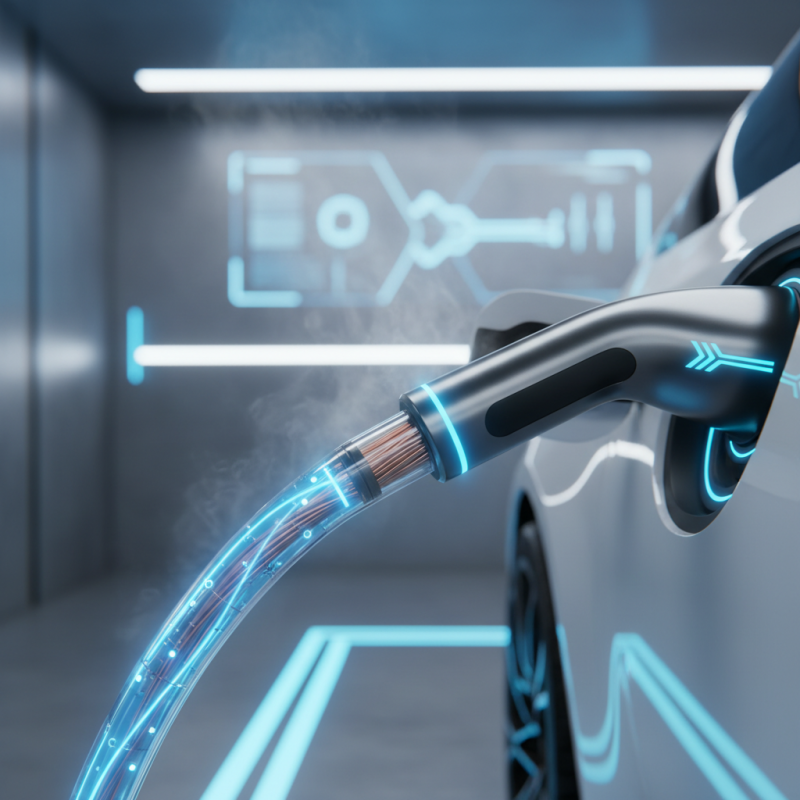
Overview of Liquid Cooled Charging Cables and Their Technology
Liquid cooled charging cables represent a significant advancement in charging technology. These cables utilize a unique cooling mechanism to manage heat during charging sessions. This technology is crucial, as overheating can lead to reduced efficiency and even safety risks. The cooling system works by circulating a liquid coolant through the cable, dissipating heat rapidly. This ensures batteries charge faster while maintaining optimal temperature levels.
The construction of these cables is essential for both performance and safety. Insulation materials must withstand extreme temperatures. Engineers focus on designing connectors that are durable yet flexible, which helps prevent wear over time.
However, there are still concerns about their robustness in various conditions. For instance, exposure to moisture could potentially compromise the cooling system. Tests reveal that while they perform well under standard conditions, further exploration is needed for extreme environments. Thus, continuous improvement and testing remain critical in this evolving field, ensuring these cables meet the demands of modern technology.
Key Safety Benefits of Liquid Cooling in Charging Cables
Liquid cooling technology in charging cables offers several crucial safety benefits. One major advantage is heat management. Traditional cables can generate substantial heat during charging, which can lead to damage or reduced performance. Liquid cooling systems actively dissipate this heat. This reduces the risk of overheating and potential hazards, ensuring the charger operates within safe temperature ranges.
Another benefit involves performance stability. Liquid-cooled cables maintain consistent power delivery, even under heavy use. This can be especially important for high-capacity devices or fast-charging scenarios. Users can trust that their devices will charge efficiently without interruptions. Additionally, the cooling system can prolong the lifespan of the cable. Reduced thermal stress translates to fewer failures and the need for replacements.
While liquid cooling presents innovative advantages, it isn’t without its challenges. For instance, manufacturing such cables can be complex and costly. Users may also worry about potential leaks or maintenance issues. These factors highlight the need for ongoing development in the field. As technology evolves, addressing these concerns will be key to ensuring broader adoption.
Comparison of Liquid Cooled Cables vs. Traditional Charging Cables
Liquid cooled charging cables represent a significant advancement over traditional cables. Their unique design allows for better temperature regulation during charging. This is crucial, especially for high-capacity batteries. Traditional cables can heat up significantly, risking damage over time. In contrast, liquid cooled cables maintain a safer temperature, providing enhanced efficiency.
However, this innovation is not without challenges. The complexity of the liquid cooling system can lead to potential issues. Regular maintenance may be required to ensure optimal performance. Additionally, the cost factor can deter some users. While liquid cooling technology offers benefits, it's essential to weigh these against practicality.
In terms of safety, liquid cooled cables significantly reduce overheating risks. They protect both devices and users. Traditional cables lack such safety measures, leaving them vulnerable to failure. Yet, the added technology raises questions about long-term reliability. Understanding these pros and cons is vital for informed buying decisions. Careful consideration can lead to a better charging experience.
Common Applications and Use Cases for Liquid Cooled Charging Cables
Liquid cooled charging cables are gaining traction in various applications due to their safety benefits. Primarily, these cables are used in electric vehicles and high-performance computing. They efficiently manage heat during charging, which reduces the risk of overheating. When charging electric cars, temperatures can soar, leading to potential hazards. Liquid cooling helps maintain optimal temperatures.
These cables are also essential in renewable energy systems. For instance, solar energy storage relies on effective charging systems. Liquid cooled cables ensure safe, quick charging, particularly in high-capacity batteries. However, there are concerns about system complexity and maintenance. Users may face challenges in understanding the technology.
In industrial settings, high-current applications use these cables extensively. They provide reliability in demanding environments. Yet, not all facilities are equipped to handle advanced cooling systems. This lack of infrastructure could impede widespread use. Balancing safety and practicality remains a challenge for many businesses.
Future Innovations and Trends in Liquid Cooling Technology for Cables
Liquid cooling technology is revolutionizing the landscape of charging cables. By using a liquid medium to dissipate heat, these cables promise enhanced safety and efficiency. According to a recent report by the International Electrotechnical Commission, overheating is a leading cause of cable failures in electric vehicles. Liquid-cooled cables can significantly mitigate this risk by maintaining optimal temperature levels.
Future innovations in this field are set to elevate cable performance further. Recent studies suggest that incorporating advanced materials, such as thermally conductive polymers, can improve heat dissipation by over 50%. These developments could lead to faster charging times and longer cable lifespans. It's crucial to consider potential challenges. Designing cables that are both flexible and durable while ensuring effective cooling remains a complex task.
Moreover, the growing demand for sustainable technologies pushes developers to seek eco-friendly materials. Balancing performance with environmental impact is a concern that the industry must address. Data indicates that the electric mobility sector is projected to reach $800 billion by 2027, underlining the urgent need for reliable and safe charging solutions. It’s a pivotal moment for engineers and manufacturers alike. They must navigate these innovations carefully to meet the rising expectations of users.
2026 Best Liquid Cooled Charging Cables Safety Benefits Explained
| Feature |
Benefit |
Expected Trends in 2026 |
| Enhanced Thermal Management |
Reduces overheating risks, prolongs cable lifespan |
Integration with smart devices for real-time temperature monitoring |
| Durable Materials |
Improved resistance to wear and tear, better performance in various environments |
Use of sustainable and recyclable materials |
| Safety Features |
Prevents electrical fires and short circuits |
Inclusion of automatic shut-off systems and better insulation |
| Compatibility |
Works with a wide range of devices and voltages |
Expansion into more device categories and universal compatibility |
| User-Friendly Design |
Easier handling and usage, better for everyday consumers |
Adoption of ergonomic designs and colors |
Conclusion
Liquid cooled charging cables represent a significant advancement in charging technology, employing a unique cooling mechanism to enhance performance and safety. One of the most pressing questions in this domain is: "What are the safety benefits of liquid-cooled charging cables?" These cables minimize overheating risks, allowing for faster charging while maintaining a stable temperature, which is crucial for both user safety and cable longevity.
Additionally, liquid cooling promotes efficient energy transfer and reduces the likelihood of electrical failures typical in traditional charging solutions. As these cables gain traction in various industries—from electric vehicles to renewable energy systems—it's essential to recognize their potential to revolutionize charging applications. Future innovations may further refine this technology, ensuring safer and more efficient power delivery across multiple use cases.

 Rama Charger