Outdoor charging is becoming ordinary, but weather protection is easy to underestimate. The International Energy Agency’s Global EV Outlook 2025 estimated that electric-car sales would exceed 20 million that year, representing more than one-quarter of global car sales. More chargers now sit beside driveways, parking lots, and exposed walls. Some face wind-driven rain and fine dust every day.
How to protect an outdoor EV charger from extreme rain and dust? Start with the enclosure rating, then inspect the installation site. IEC 60529 classifies protection against solid particles and water; an IP rating is useful, but it does not promise protection under every exposure or installation condition. Check the manufacturer’s instructions, cable-entry seals, mounting position, and drainage. A charger beneath a roof can still take rain blown sideways. Dust can gather around seals and connectors. Ratings help. They do not solve poor placement.
NREL researcher Michael Kintner-Meyer has studied energy systems and electric-vehicle infrastructure. A practical takeaway from that field is simple: match equipment to actual site conditions, not assumptions about “outdoor” use. This is a paraphrase, not a verbatim quotation. That distinction matters. The IEA figures describe market growth, not charger failure rates, and public data on rain- and dust-related failures remain limited. This guide focuses on concrete safeguards: suitable ingress protection, careful installation, routine seal checks, and cleaning that follows the manufacturer’s guidance. No enclosure is maintenance-free. A cracked gland or loose cover can undo an impressive rating.
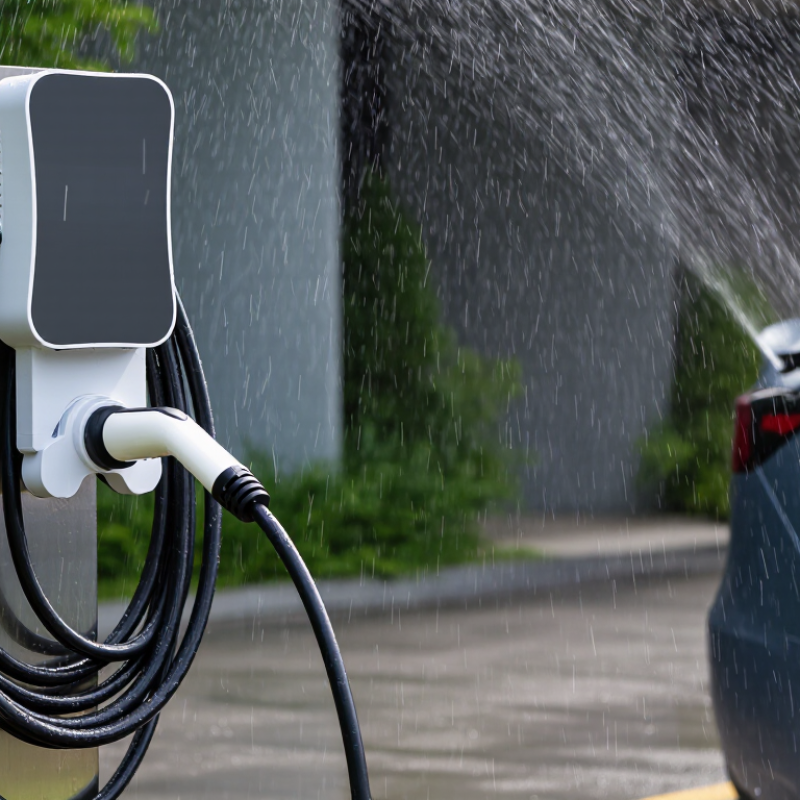
Rain and dust affect outdoor EV chargers in different ways. Rain can collect around cable entries, covers, and connector caps. A properly rated enclosure helps, but seals can wear or shift over time. Repeated wetting may leave moisture around contacts, especially when a cap does not close fully. Small gaps matter. Dust can settle in vents, seams, and connector recesses. Fine grit may interfere with a snug connection, while packed debris can reduce airflow around components that need cooling.
A dry-looking surface does not prove that the inside is dry. That is easy to overlook. After heavy rain or a dusty day, check the enclosure, cable, and connector for standing water, grit, cracks, or loose covers. Use a clean, dry cloth on exterior surfaces, and follow the charger maker’s care instructions for any cleaning. Do not push tools or cloths into electrical openings. A shaded position under a suitable canopy can reduce direct exposure, but it should not block ventilation or trap damp air. Protection is not perfect; weather, installation, and aging all make a difference.
Outdoor EV chargers face more than rain. Wind can push fine dust into corners, while runoff may collect beneath a wall-mounted unit. Check the enclosure’s IP rating and match it to the actual location.
The first IP digit describes protection from solid particles; the second describes water resistance. IP54 offers limited dust protection and resists splashing water; IP65 is dust-tight and tested against water jets.
These ratings do not promise survival in every storm. They describe tested conditions, not a flooded mounting spot or a damaged seal. Check the manufacturer’s documentation for details on the charger and connector.
A higher number is not automatically the best choice. Consider whether the charger sits under a roof, beside a dusty driveway, or in direct, wind-driven rain. Keep it away from low points where puddles form. Check cable holsters and connector covers, too; water can linger there. Small details matter. Ask a qualified installer to confirm the mounting position and follow the installation instructions. Inspect seals and covers after rough weather. An IP label alone is not enough; placement and upkeep can change the protection you actually get.
For better rain and dust protection, treat charger placement as part of the installation, not an afterthought. The IEA reported that public charging points grew by more than 40% worldwide in 2023. More outdoor equipment means more exposure to weather, splash, and airborne grit.
Choose a firm, elevated mounting surface, away from low spots where rainwater collects. A modest overhang can reduce direct rainfall, but wind-driven rain still reaches the sides. Keep the unit clear of roof runoff, sprinkler spray, and dusty driveways. Leave enough space around vents and connectors; enclosing a charger too tightly can trap heat. Small detail. Route the cable so its lowest point hangs below the socket, helping water drip away rather than run toward the connection.
Check the charger’s stated protection rating under IEC 60529. For example, IP54 indicates dust protection and resistance to splashing water, not protection from flooding or pressure washing. A canopy is helpful, but it is not a seal. I would still inspect the mounting area after heavy rain, because drainage patterns can be surprisingly different once the ground is saturated. Keep the screen and cable connector accessible, and use a sturdy post or barrier where vehicles could strike the unit.
Outdoor charging equipment faces more than direct rain. Wind can push water beneath a loose connector cap, while fine dust settles inside cable ends and wall-mounted holders. Keep the connector off the ground and use its designed holster whenever charging ends. Check that the cap closes fully, without forcing it over grit. Small gaps matter.
Before a wet-weather session, look for cracked cable insulation, flattened seals, or moisture inside the connector. Don’t plug in equipment that is visibly wet or damaged; follow its manufacturer’s instructions and arrange qualified service when needed. A soft, dry cloth can remove surface dust. Avoid pressure washers, harsh cleaners, and unapproved lubricants, which may damage seals or leave residue on electrical contacts. Keep cable loops broad rather than sharply bent, and prevent vehicle tires from pinching them. A cable can look fine outside while hiding wear at a strain relief. Inspect it closely, even when you’re in a hurry. No cover makes outdoor equipment maintenance-free. Rain protection depends on intact seals, correct installation, and regular checks.
Understanding the dust and water digits in common IP ratings helps when assessing outdoor chargers, cables, connectors, and seals.
Under IEC 60529, the first digit describes protection against solid objects and dust; the second describes protection against water. For example, IP6X is dust-tight, while IPX7 indicates protection against temporary immersion under specified test conditions. An IP rating alone does not establish resistance to UV exposure, corrosion, wear, or every installation condition. Check product specifications and keep connectors properly capped and seals in good condition.
Inspect the charger monthly, and after a severe storm. Check the casing for cracks, loose covers, faded seals, or water marks near cable entries. Look underneath, too; leaves and grit can block drainage and hold moisture against the enclosure. Small clues matter.
With the unit switched off as directed in its manual, wipe the exterior with a soft, slightly damp cloth. Keep water away from sockets and openings. Avoid pressure washers, abrasive cleaners, and compressed air, which can force dust or moisture past seals. Let the surface dry before restoring power. Do not guess. If water is visible inside, stop using the charger and arrange a qualified inspection.
Examine the cable along its full length for cuts, flattened spots, stiffness, or exposed conductors. Check that the connector is clean and dry, and hangs clear of puddles and soil between charging sessions. Make sure the mounting remains firm and the cable does not pull sharply at its entry point. Record repeated faults, unusual heat, or a burning smell, then contact a qualified electrician or the equipment provider. I have found that hurried checks miss damage behind the cable hook; it is easy to overlook, even when the front looks fine. Follow the unit’s own maintenance instructions, since weather protection varies by enclosure design.
Water may collect near cable entries, covers, or connector caps. Small gaps matter.
Yes. A dry exterior does not prove the inside is dry. Check for water marks and loose covers after heavy rain.
Check it monthly and after severe storms. Look for cracks, faded seals, and debris underneath.
Switch it off as directed in its manual. Use a soft, slightly damp cloth, then let the surface dry.
Avoid pressure washers, abrasive cleaners, and compressed air. They may push water or dust past seals.
Look along its full length for cuts, flattened spots, stiffness, or exposed conductors. Check behind the cable hook, too; a quick glance can miss damage.
Keep it clean and dry, hanging clear of puddles and soil. Make sure its cap closes fully.
Stop using it and arrange a qualified inspection. Do not guess.
A suitable canopy can reduce direct exposure, but it should not block ventilation or trap damp air. Protection is not perfect.
Outdoor EV chargers face ongoing exposure to driving rain, windblown dust, and moisture that can wear down enclosures, connectors, and seals over time. How to protect an outdoor EV charger from extreme rain and dust? Start by choosing equipment with weather-protection ratings suited to its installation environment, then mount it securely in a location with good drainage and, where practical, shelter from direct rainfall and blowing debris. Follow the manufacturer’s installation guidance and avoid placing the unit where water can pool or collect.
Protect the charging cable and connector by using their designated holders and keeping connection points clean, dry, and properly covered when not in use. In 2026, regular inspections remain essential: check for cracked seals, damaged cables, loose fittings, corrosion, or debris, and arrange qualified servicing if anything appears worn or unsafe. Consistent care helps preserve reliable charging and reduces the effects of harsh outdoor conditions.

Rama Charger