Choosing an AC charger is no longer a minor garage decision. It affects charging time, installation cost, household energy use, and daily convenience. The International Energy Agency reported that global electric car sales exceeded 17 million in 2024. Its Global EV Outlook 2025 also noted continued expansion of public and private charging infrastructure. More drivers now face a practical question: How to choose between a single-phase and three-phase AC charger?
A single-phase charger commonly delivers 3.7 or 7.4 kW. It suits many homes with modest electrical capacity and overnight charging routines. A three-phase charger can provide 11 or 22 kW, when the vehicle and building supply support those levels. For example, an 11 kW charger may add energy much faster during a short evening stop. However, the car’s onboard charger remains the limiting factor. A vehicle accepting only 7.4 kW will not charge faster with a 22 kW wallbox.
The right answer depends on real driving distance, available electrical capacity, parking time, and future vehicle plans. Regional standards matter, too. Three-phase power is common in many European properties, but less available in some residential markets. Installation checks should include cable capacity, protection devices, load balancing, and local electrical requirements. The International Electrotechnical Commission and national safety authorities provide relevant technical frameworks, but local professionals must confirm site conditions.
A faster charger is not always better. It may increase installation complexity without improving daily use. I have seen specifications look impressive on paper, yet household demand made smart load management essential. That overlooked detail can change the decision. Reliable selection combines manufacturer data, electrician assessment, and honest charging habits.
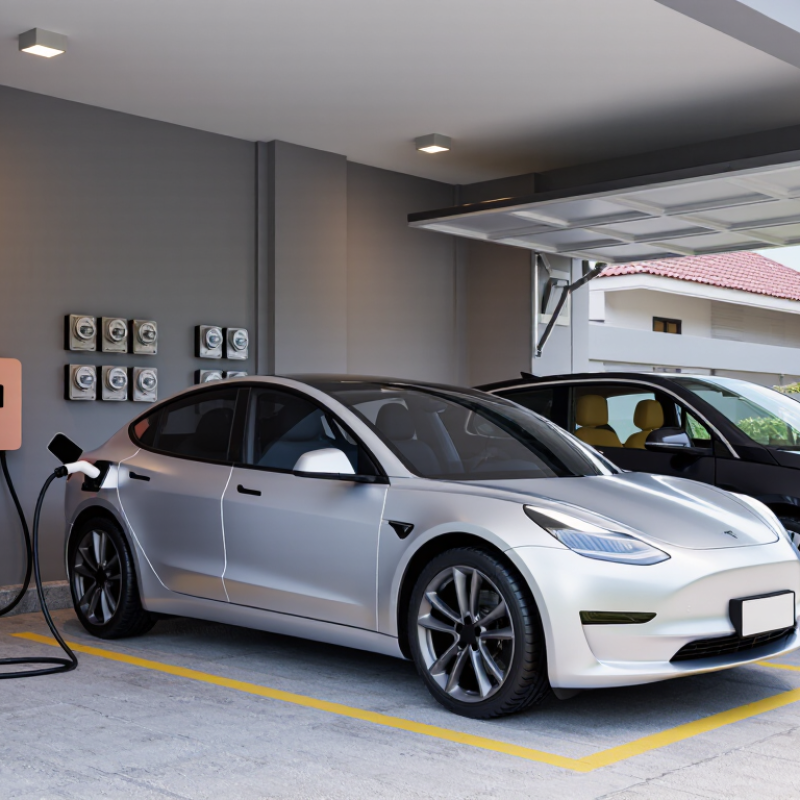
Single-phase AC charging uses one live electrical phase and is common in homes. A typical 230-volt connection can deliver around 3.7 kW at 16 amps or 7.4 kW at 32 amps. This suits overnight charging, especially when daily driving is moderate. The difference is practical. Installation is often simpler, but charging takes longer when the battery is large.
Three-phase AC charging distributes electricity across three phases. At 400 volts, a 16-amp system may provide about 11 kW, while 32 amps can reach approximately 22 kW. The vehicle must support three-phase charging, and the property must have a suitable electrical supply. Check the vehicle first. A three-phase charger cannot force a single-phase onboard charger to charge faster.
Real-world selection requires more than comparing maximum power. An electrician should inspect cable size, protective devices, available capacity, and local installation requirements. Smart load management can reduce the risk of overloading a home while other appliances operate. A simple rule can mislead. More power is not always better if the car accepts only 7.4 kW or the home connection cannot support higher demand. In practice, overnight charging may cover most drivers’ needs, while high-mileage users can benefit from three-phase charging. I would also question advertised speed, because charging slows near a full battery and varies with temperature. Plan around usable daily energy, not the highest number on the specification sheet.
Choosing single-phase or three-phase AC charging starts with your vehicle, not the charger’s maximum label. Check the owner’s manual for the onboard charger rating, supported input phase, and maximum AC power. A vehicle limited to 7.4 kW will not charge faster from an 11 kW or 22 kW unit. It may still work, but unused capacity adds cost. The IEA’s Global EV Outlook 2024 reported more than 14 million electric cars sold worldwide in 2023. Compatibility is becoming less forgiving as vehicle specifications diversify.
Your property matters just as much. Single-phase supply commonly supports charging around 3.7 or 7.4 kW. Three-phase supply can support 11 or 22 kW, subject to local electrical capacity and installation rules. The U.S. Department of Energy’s Alternative Fuels Data Center lists Level 2 charging equipment across a broad power range, showing why one label cannot describe every installation. A qualified electrician should confirm cable size, protective devices, load balance, and available capacity. I once saw a high-power unit installed where the daily driving need was modest. Faster was possible, but not necessarily wiser.
Tips: Match the charger to your onboard AC limit. Measure your daily distance first. For example, 50 kilometres each evening may need only several hours of charging. Ask for a written load assessment, not a verbal promise. Recheck the vehicle manual before ordering; specifications can be easy to misread.
| Assessment Factor | Single-Phase AC Charging | Three-Phase AC Charging | What to Check Before Choosing |
|---|---|---|---|
| Typical Electrical Supply | Usually based on a 230 V single-phase supply in many regions. | Usually based on a 400 V three-phase supply in many regions, with approximately 230 V available between each phase and neutral. | Voltage standards vary by country. Confirm the supply type and voltage with a qualified electrician. |
| Common Charging Power | Approximately 2.3 kW at 10 A, 3.7 kW at 16 A, or 7.4 kW at 32 A on a 230 V supply. | Approximately 11 kW at 16 A per phase or 22 kW at 32 A per phase on a 400 V three-phase supply. | Actual power is limited by the lowest-rated component: the vehicle, charger, cable, circuit, or electrical service. |
| Basic Power Formula | Power = Voltage × Current Example: 230 V × 32 A ≈ 7.4 kW. |
Power = √3 × Line Voltage × Current Example: 1.732 × 400 V × 16 A ≈ 11 kW. |
The displayed charging power may be lower because of charging losses, temperature limits, or vehicle power management. |
| Vehicle Compatibility | Compatible with vehicles that accept single-phase AC charging. A three-phase-capable vehicle can usually charge from a single-phase supply, subject to its specifications. | Only provides a three-phase benefit when the vehicle’s onboard AC charger supports three-phase input. | Check the vehicle manual or technical specification for the maximum AC input power and phase configuration. |
| Typical Charging Speed | Suitable for overnight charging and daily commuting. A 60 kWh battery may require roughly 8–17 hours at 3.7–7.4 kW, excluding losses and charging taper. | Can substantially reduce charging time. A 60 kWh battery may require roughly 3–6 hours at 11–22 kW, excluding losses and charging taper. | Approximate time can be estimated as: Energy Required ÷ Charging Power. Real charging time varies with battery state of charge and temperature. |
| Best Fit for Home Use | Homes with single-phase electrical service, moderate daily mileage, or limited electrical capacity. | Homes with existing three-phase service, higher daily mileage, or a need to restore a larger amount of energy quickly. | A three-phase charger normally requires a suitable three-phase connection and balanced installation across the phases. |
| Installation Requirements | Requires an appropriately rated circuit, protective devices, earthing, cable size, and local-compliant installation. | Requires a three-phase circuit, suitable protection on all relevant phases, correct phase sequence where applicable, and load assessment. | Installation should be designed and tested by a licensed electrician in accordance with local electrical regulations. |
| Electrical Capacity | A 7.4 kW charger may draw about 32 A continuously from one phase, which can be significant in a home with other large loads. | An 11 kW charger typically draws about 16 A per phase; a 22 kW charger typically draws about 32 A per phase. | Review the main supply rating, household demand, phase balance, and whether dynamic load management is needed. |
| Energy Efficiency Consideration | May be practical for smaller charging sessions and can avoid unnecessary electrical upgrades. | Can deliver more power efficiently for compatible vehicles, but the higher rated equipment may increase installation complexity and cost. | Choose charging power based on required energy and parking time rather than maximum charger output alone. |
| Charging Cable | Must be rated for the intended single-phase current and connector configuration. | Must be rated for three-phase operation and the intended current. Some cables support three-phase charging while others are single-phase only. | Verify the cable rating, connector type, current capacity, and compatibility with both the vehicle and charger. |
| Solar Power Integration | Often easier to match with single-phase household solar generation, depending on the electrical layout and local rules. | Can work well with three-phase solar systems, but phase allocation and export limits may affect surplus-solar charging. | Confirm how the energy meter measures phases and whether the charger supports solar-aware or adjustable-current charging. |
| When Single Phase Is the Better Choice | Choose single phase when the vehicle’s onboard charger is single-phase, daily energy needs are moderate, charging occurs overnight, or the property lacks three-phase service. | It can provide sufficient practical charging without the cost of upgrading the electrical supply. | |
| When Three Phase Is the Better Choice | Choose three phase when the vehicle supports three-phase AC charging, faster home charging is important, daily energy demand is high, and the property has adequate three-phase capacity. | A three-phase charger does not automatically increase charging speed if the vehicle accepts only single-phase AC power. | |
| Important Regional Note | The term “single phase” or “three phase” must be interpreted according to the local electrical system. For example, North American residential split-phase service is not the same as European three-phase service. | Always use local voltage, wiring, protection, connector, and installation requirements when selecting equipment. | |
How to Choose a Single Phase or Three Phase AC Charger?
Electrical capacity should guide your decision, not charger advertising. A single-phase connection commonly supports 3.7 to 7.4 kW, depending on voltage, current, and local supply limits. It suits many homes with moderate daily driving. A three-phase connection can deliver around 11 to 22 kW when the vehicle supports it. That may refill the battery faster during short parking periods. However, the car’s onboard charger sets the real limit. A 22 kW charger will not charge at 22 kW if the vehicle accepts only 11 kW.
Installation needs can change the calculation. A qualified electrician should inspect the main supply, cable route, consumer unit, earthing, and protective devices. Three-phase installation may require new cabling, a service upgrade, or approval from the local network operator. These steps can increase cost and delay. Single-phase equipment is often simpler, but it can overload a busy household supply. In site assessments, I have seen people choose higher power before checking their actual parking schedule. That choice was expensive and unnecessary.
Tips: Check your vehicle’s AC input rating first. Record your daily mileage for one week. Ask an electrician to measure available capacity during peak household use. Leave room for future appliances, too. Faster is not always better. A smaller charger may be the more reliable choice.
A single-phase AC charger often suits households with one electric vehicle and moderate daily mileage. At 7.4 kW, overnight charging can restore useful range before morning. Its simpler electrical setup may reduce installation costs and ongoing maintenance. However, operating costs depend more on tariffs, charging losses, and usage times than phase count. Check the meter, cable distance, and available electrical capacity before accepting a quotation. Small details matter. A cheaper installation may become costly if charging happens during expensive peak periods.
A three-phase AC charger can deliver power more steadily and support faster charging, commonly at 11 kW or 22 kW. This can improve efficiency when the vehicle accepts three-phase input. It may also reduce waiting time between work, errands, and longer trips. However, higher rated power does not guarantee lower energy costs. The vehicle, charger, and electrical supply must work together. An electrician should verify phase balance, protective devices, cable sizing, and local connection requirements. One easy mistake is paying for capacity that the vehicle cannot use.
Future demand deserves equal attention. A second vehicle, home battery, heat pump, or solar system could change the load profile. A three-phase connection may provide more flexibility, but it can require greater installation expense. Single-phase charging remains practical when daily energy needs stay modest. I would avoid choosing only by charging speed. Review twelve months of driving, expected tariff changes, and possible household upgrades. The perfect calculation is rarely available. A cautious estimate, based on real charging habits, is usually more reliable than a maximum-power promise.
Based on a 60 kWh energy delivery, 200 charging sessions per year, and an electricity rate of $0.15/kWh, a 7.4 kW single-phase charger requires approximately 8.8 hours per session and about $1,957 in annual electricity costs. An 11 kW three-phase charger can complete the same charging task in approximately 5.7 hours and costs about $1,895 annually when operating at a higher assumed efficiency.
Three-phase charging is generally more suitable for users with higher daily mileage, shorter charging windows, or expected future electric-vehicle charging demand. Actual results vary with battery size, charger efficiency, vehicle limits, electricity tariffs, and installation constraints.
Choose the AC charger configuration that fits your property and usage, not simply the highest rating. A single-phase 7.4 kW charger can add roughly 35–45 kilometres of range per hour, depending on the vehicle. It suits many homes with overnight charging and moderate daily mileage. A three-phase 11 kW charger can deliver energy faster, while a 22 kW unit needs both a compatible vehicle and sufficient electrical capacity. Many electric cars accept less than 22 kW through AC charging, so a bigger charger may add cost without adding useful speed.
The International Energy Agency’s Global EV Outlook 2024 reports that electric car sales exceeded 14 million worldwide in 2023. This growth makes practical home charging decisions more important. Check your property’s supply, peak household demand, cable distance, and future plans with a qualified electrician. In apartment buildings, shared loads can reduce available power. In detached homes, solar generation and scheduled charging may matter more than maximum output. I have seen homeowners choose 22 kW chargers, then discover their vehicle accepts only 11 kW. That choice was not dangerous, but it was inefficient.
Tips: Review your vehicle’s AC limit first. Measure your typical daily mileage. Ask for dynamic load management if several large appliances operate together. Keep some capacity for future needs, but do not pay for unused power. A cautious calculation usually beats an impressive specification.
Single-phase charging uses one live electrical phase, common in homes. A typical 230-volt connection delivers about 3.7 kW at 16 amps. At 32 amps, it can provide around 7.4 kW. It works well overnight.
Three-phase charging distributes electricity across three phases. At 400 volts, 16 amps may provide about 11 kW. A 32-amp system may reach approximately 22 kW. The vehicle must support three-phase charging.
Three-phase charging usually charges faster when the vehicle supports it. An 11 kW charger can refill energy during shorter parking periods. A 22 kW charger is not always faster. The vehicle’s onboard charger sets the actual limit.
No. A vehicle accepting only 7.4 kW will still charge near that limit. The larger charger may add cost without adding useful speed. This is an easy mistake.
It often is, especially with moderate daily mileage.
The electrician should inspect cable size, cable distance, protective devices, earthing, and available capacity. They should also check peak household demand. An electric cooker, heater, and charger may operate together. The calculation can be imperfect.
Not necessarily. The property needs a suitable electrical supply and enough spare capacity. Installation may require new cabling, service changes, or local approval. Apartment buildings may have shared-load limits.
It helps reduce overload risks when several large appliances operate together. The charger can adjust power during busy periods. This may protect available capacity. It cannot create extra electricity.
Check the vehicle’s AC input rating first. Record daily mileage for one week. Ask an electrician to measure capacity during peak household use. Choose unused capacity carefully. Faster is not always better.
Choosing the right AC charger begins with understanding the differences between single-phase and three-phase power. Single-phase charging is often suitable for homes, apartments, and drivers with moderate daily mileage, while three-phase charging can deliver higher power and reduce charging time when the vehicle and electrical system support it. How to choose between a single-phase and three-phase AC charger? Start by checking your vehicle’s onboard charger, maximum AC input, and connector compatibility to avoid paying for capacity your car cannot use.
Next, evaluate your property’s available electrical capacity, wiring, installation requirements, and any necessary upgrades. Compare charging speed with purchase, installation, and operating costs, while considering efficiency and potential future needs such as a larger battery, multiple electric vehicles, or increased driving distance. The best configuration should match your vehicle, energy supply, budget, and daily routine. A carefully planned choice can provide reliable charging performance without unnecessary complexity or expense.

Rama Charger