As the world moves towards sustainable energy solutions, homeowners are often left wondering about emerging technologies. One important distinction is between Vehicle-to-Grid (V2G) and Vehicle-to-Home (V2H) systems. These technologies play a role in how electric vehicles can interact with our homes and the power grid.
What is the difference between V2G and V2H for homeowners? Understanding this is essential for making informed decisions about energy management. V2G enables electric vehicles to send electricity back to the grid, benefiting both homeowners and the broader community. In contrast, V2H allows homeowners to utilize their car’s battery as a power source. It can supply energy directly to the home during peak hours or outages.
While both solutions offer unique advantages, they also come with complexities. Homeowners may struggle with installation costs and understanding the long-term benefits. Evaluating both options requires careful consideration of personal energy needs. Balancing immediate savings with future energy independence can be a challenge.
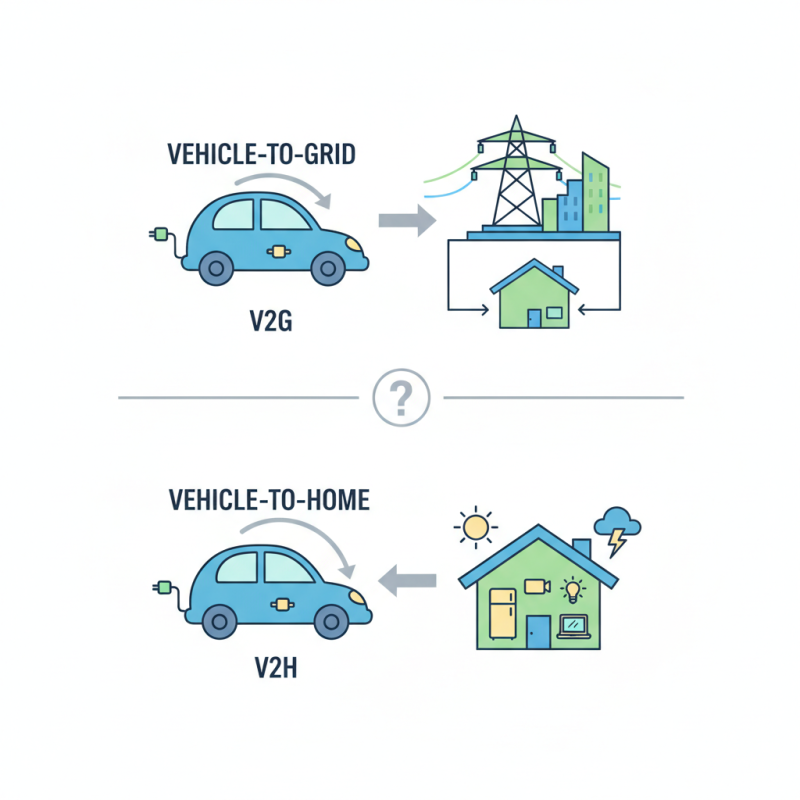
Understanding vehicle-to-grid (V2G) technology can be empowering for homeowners. Essentially, V2G allows electric vehicles (EVs) to send energy back to the grid. This two-way flow of energy provides multiple benefits. Homeowners can reduce their electricity bills and help the grid during peak demand times. It’s like being both a consumer and a supplier of electricity.
Key features of V2G include energy storage and grid support. Homeowners can store excess energy during off-peak hours when rates are lower. During high-demand periods, that stored energy can be supplied back to the grid for compensation. This connection to the grid can maximize energy efficiency and make a difference during natural events, like storms. However, some may wonder if V2G affects vehicle battery life. Frequent charging and discharging can raise concerns. It’s crucial to weigh these aspects carefully.
Educating yourself about V2G technology is vital. Explore local policies and incentives related to V2G in your area. Every region may have different regulations affecting implementation. Understanding these nuances can ensure you make informed decisions. Engaging with experts and current users can provide valuable insights too.
Vehicle-to-Home (V2H) technology is gaining traction among homeowners. It allows electric vehicles (EVs) to serve as backup power sources for homes. This system can discharge energy stored in EV batteries to power household appliances during outages or peak periods. The convenience of V2H lies in its ability to enhance energy independence and efficiency.
One significant benefit of V2H is cost savings. Homeowners can utilize stored energy during high electricity rate periods, reducing bills. This technology also promotes sustainable living. Using renewable energy sources to charge EVs and discharge energy at home decreases reliance on fossil fuels. However, there are complexities to consider. The initial setup costs can be high, and not all EVs support V2H.
For effective use of V2H, homeowners need to analyze their energy needs. Understanding battery capacity is crucial, as not all EVs have the same power output. There might be unanticipated challenges in integrating V2H with existing home systems. Some users report limitations in battery discharge rates, affecting performance during peak demand. Identifying these aspects ensures a more reliable and efficient experience with V2H technology.
Understanding the key differences between Vehicle-to-Grid (V2G) and Vehicle-to-Home (V2H) technologies is crucial for homeowners looking to maximize their energy solutions. Both concepts aim to leverage electric vehicle batteries, impacting energy consumption and costs significantly. A recent report from the International Energy Agency projects that, by 2030, 230 million electric vehicles will be on the roads. This increasing adoption makes grasping these concepts essential.
V2G technology allows electric vehicles to send energy back to the grid. This helps stabilize grid demand and supports renewable energy integration. Homeowners may potentially earn payment for energy they supply back to the grid. According to industry analyses, V2G could result in savings of $5-$15 billion annually in energy costs by 2030.
V2H, on the other hand, serves as a home energy management solution. It allows homeowners to use their electric vehicles as backup energy sources during outages or peak pricing periods. A homeowner can reduce energy bills significantly, especially during high-demand times. Reports suggest that employing V2H could decrease electricity costs by about 30% when appropriately managed.
Tips: Consider your household's energy needs. Evaluate if V2G or V2H best suits your lifestyle. It's also wise to stay informed about regional energy policies that may influence the benefits of these technologies. Exploring options could empower you to make informed decisions that align with your sustainability goals while enhancing energy resilience at home.
V2G (Vehicle-to-Grid) and V2H (Vehicle-to-Home) offer unique benefits for homeowners. V2G allows electric vehicles (EVs) to interact with the grid, sending energy back during peak hours. This can help reduce energy costs. Homeowners can earn credits or payments for the surplus energy they provide. However, this system requires careful planning and a smart meter setup.
In contrast, V2H enables homeowners to use stored energy from their EVs directly in their homes. This is particularly beneficial during power outages or high electricity rate periods. Imagine charging your car overnight and using that energy for breakfast appliances in the morning. Still, this requires proper inverter technology and may not fully power the home during extended outages.
Many homeowners may face challenges with these technologies. An initial investment is necessary for appropriate home installations. Understanding your energy usage is crucial for maximizing benefits. Balancing energy needs with grid demands can become complex. It’s essential to assess your home’s energy consumption and vehicle range regularly.
As sustainable energy solutions continue to evolve, two technologies stand out: Vehicle-to-Grid (V2G) and Vehicle-to-Home (V2H). Both of these systems utilize electric vehicles (EVs) as energy sources, yet they serve different purposes. V2G allows EVs to send electricity back to the grid. This interaction benefits both homeowners and utilities. Homeowners can sell excess energy during peak demand times, potentially earning money. Meanwhile, V2H focuses on using energy stored in an EV to power a home directly, especially during outages.
Looking toward the future, V2G and V2H will play crucial roles in sustainable home energy systems. As more homeowners adopt EVs, energy self-sufficiency becomes feasible. Imagine an entire neighborhood powered by parked EVs during a blackout. However, challenges remain. Integration into existing energy infrastructure is complex. Homeowners need to understand the implications of battery life and energy management. Additionally, regulations will evolve alongside these technologies.
Investing in V2G and V2H systems may require careful consideration. Homeowners should weigh costs against potential benefits. Uncertainties about market trends make it necessary to remain informed. Engaging with local energy policies will also become increasingly important. As innovations unfold, staying updated will empower homeowners to make informed decisions about their energy future.
: V2G technology enables electric vehicles to send energy back to the electricity grid.
Homeowners can reduce electricity bills and earn compensation for surplus energy during peak demand.
V2G sends energy to the grid, while V2H uses EV energy to power the home directly.
Frequent charging and discharging may impact battery life. Consider these effects carefully.
A proper inverter and smart meter are essential for V2H functionality at home.
Initial investment, energy management, and understanding energy consumption complicate implementation.
Integration with existing infrastructure and evolving regulations will shape their future.
Engage with local policies and connect with experts to understand new developments.
Entire neighborhoods could use EVs to power homes during blackouts, enhancing energy self-sufficiency.
Consider potential benefits against costs. Stay updated on market trends for informed decisions.
The article "2026 How to Understand the Difference Between V2G and V2H for Homeowners" provides a comprehensive overview of two innovative energy solutions: Vehicle-to-Grid (V2G) and Vehicle-to-Home (V2H). It begins by defining V2G, highlighting its key features, such as the ability for electric vehicles to send electricity back to the grid, thereby helping to stabilize energy supply and potentially earn homeowners extra income. In contrast, V2H focuses on utilizing electric vehicles to power home appliances, offering immediate benefits for residential energy consumption.
A critical examination of "What is the difference between V2G and V2H for homeowners?" reveals that while V2G is primarily oriented towards grid interaction, V2H centers on enhancing home energy management. The article further discusses the practical applications of both systems in daily life, illustrating their roles in promoting sustainable energy practices. Lastly, it explores future trends that indicate a growing integration of V2G and V2H in residential energy systems, which could significantly contribute to environmental sustainability and energy independence for homeowners.
Rama Charger