Installing an EV wallbox does not always require a costly home-grid upgrade. The real question is: How to install an EV wallbox without upgrading the home grid? The answer depends on your property’s available capacity, existing appliances, and charging habits. A 7.4 kW wallbox may be suitable for one home, yet excessive for another with electric heating, an induction cooker, and a heat pump running together.
Experienced installers usually begin with a load assessment, not the charger brochure. They inspect the consumer unit, service fuse, cable route, earthing system, and peak household demand. A dynamic load-management device can reduce charging power when the oven or water heater switches on. It can then increase charging power when the house becomes quieter. Smart scheduling also helps. Charging after midnight may prevent unnecessary peaks.
“Smart charging can help drivers charge efficiently without placing avoidable pressure on the electricity network,” says Dr. Ben Lane, an electric-vehicle industry analyst and founder of Zap-Map. His point is practical, but it is not a universal solution. Load balancing cannot repair undersized wiring or replace a required safety upgrade. A qualified electrician must confirm the installation meets local electrical standards and the wallbox manufacturer’s requirements.
The careful approach is slower.
This guide explains how to compare charger power, measure household demand, select compatible protection equipment, and configure smart controls. It also examines costs, charging speed, and common installation mistakes. Some homes will manage without a grid upgrade. Others will not. That honest distinction matters more than promising a one-size-fits-all installation.
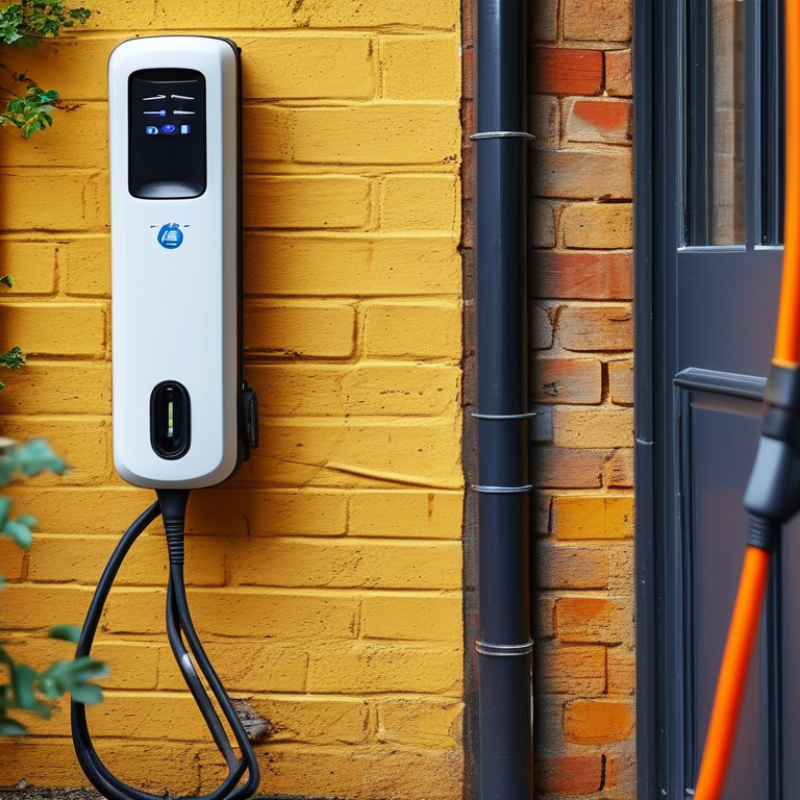
Installing an EV wallbox without a grid upgrade starts with an accurate NEC 220 load calculation. The service rating alone does not prove spare capacity. A 200-amp service may already support a full electric range, heat pump, water heater, dryer, and workshop equipment.
Record each significant load from nameplates, panel schedules, and actual equipment data. Apply the appropriate NEC demand factors, then compare the calculated load with the service and feeder ratings. The EVSE must generally be treated as a continuous load at 125 percent of its maximum output. A 40-amp EVSE, for example, requires 50 amps in the calculation. That detail is often missed.
Check the main breaker, service conductors, panel bus rating, feeder capacity, and available breaker spaces. A load-management system may reduce charging power when household demand rises. It can help avoid an upgrade, but only when its operation meets local electrical requirements. Do not rely on a larger breaker. That shortcut can create a serious hazard.
In practice, I would test the calculation against evening usage, not an empty house. Cooking and charging may overlap. It is easy to underestimate that moment. A qualified electrician should verify the installation, conductor sizing, grounding, overcurrent protection, and local inspection rules. NEC guidance is authoritative, but the local authority having jurisdiction may impose additional requirements. Recheck the numbers after installation. Homes change.
A home assessment should come before choosing the wallbox. A 7.4 kW unit uses 230 V at 32 A on a single phase. It suits many homes with limited electrical capacity. Charging a 60 kWh battery may take about eight to nine hours. That timing depends on charging losses and the vehicle’s onboard charger.
An 11 kW wallbox uses 400 V at 16 A across three phases. It can charge the same battery in roughly five to six hours. However, the property must already have a suitable three-phase supply. Installing the unit does not create one. A qualified electrician should inspect the main fuse, distribution board, earthing, cable route, and phase balance.
Load management matters more than headline power. A dynamic controller can reduce charging current when ovens, heat pumps, or water heaters operate. The wallbox then uses spare capacity instead of pushing the home beyond its limit. Keep it simple. Avoid relying on assumptions.
Use a dedicated circuit with correctly rated protection, weather-resistant equipment, and cable sized for the installation length. Local electrical rules still apply, even when no grid upgrade is planned. I have seen installations judged by charger rating alone, which is a poor shortcut. A 7.4 kW charger may be safer for one home, while an 11 kW model may be practical for another. The final choice should follow measured demand, not marketing numbers.
Dynamic Load Management (DLM) can control charging without increasing the property’s main electrical rating. It measures total household demand in real time. The system then reduces or pauses wallbox output when cooking, heating, or laundry loads rise. This protects the main supply from overload. The International Energy Agency reported over 14 million electric cars were sold worldwide in 2023. As adoption grows, smarter home charging becomes increasingly important.
Consider a home with a 100-amp main supply. Existing appliances may already use 70 amps during evening peaks. A wallbox could request another 32 amps, exceeding the safe limit. DLM can temporarily assign only 20 amps, then restore higher charging when demand falls. The U.S. Department of Energy’s Alternative Fuels Data Center states that Level 2 charging commonly operates between 7.2 and 19.2 kilowatts. That range can significantly affect a household’s load profile.
A reliable installation starts with a measured load assessment, not guesswork. An electrician should inspect the service rating, cable capacity, protection devices, and local requirements. The wallbox and meter must communicate consistently. Poorly configured controls can create delays or nuisance trips.
That is the uncomfortable part. DLM does not create extra electricity. It only shares limited capacity more intelligently. In practice, charging may slow during peak periods, and some owners may dislike that compromise. Yet a modest overnight charge can still meet daily driving needs without expensive infrastructure work.
How to Install an EV Wallbox Without a Grid Upgrade?
A grid upgrade may not be necessary when the existing electrical service has spare capacity. Under NEC 625, size the branch circuit at 125% of the EV charger’s continuous charging current. For example, a 40-amp charger requires a circuit rated for at least 50 amps. The calculation applies to the charging load, not the vehicle’s battery size.
Use a dedicated circuit with conductors, overcurrent protection, and equipment rated for the installation conditions. Check the charger’s nameplate current first. Then review the main panel’s load calculation, including heating, cooking, air conditioning, and other continuous loads. A panel can have unused breaker spaces but still lack service capacity. That detail is easy to miss.
A 50-amp circuit may support a 40-amp charger, but the installation still needs correct conductor sizing, grounding, termination torque, and voltage-drop review. Long cable runs can create heat and charging losses. Local electrical rules may modify or supplement NEC requirements, so a qualified electrician should verify the design and permit process. I would not rely on a simple breaker swap. A neat calculation can still overlook an aging panel, shared loads, or limited service conductors. Lowering the charger’s configured current may avoid an upgrade, but only when the equipment supports that setting safely. Check twice.
| Continuous EV Charging Current | 125% NEC Continuous-Load Calculation | Typical Minimum Circuit Rating | Approx. Output at 240 V | Approx. Output at 208 V | Load-Management Requirement for Avoiding a Service Upgrade |
|---|---|---|---|---|---|
| 16 A | 16 A × 1.25 = 20 A | 20 A, 2-pole circuit | 3.84 kW | 3.33 kW | Usually unnecessary when adequate spare service capacity already exists. |
| 24 A | 24 A × 1.25 = 30 A | 30 A, 2-pole circuit | 5.76 kW | 4.99 kW | Useful when the service has limited headroom and charging can be reduced during peak loads. |
| 32 A | 32 A × 1.25 = 40 A | 40 A, 2-pole circuit | 7.68 kW | 6.66 kW | Dynamic load control may be needed if heating, cooling, or electric appliances can operate simultaneously. |
| 40 A | 40 A × 1.25 = 50 A | 50 A, 2-pole circuit | 9.60 kW | 8.32 kW | A load-shedding or energy-management system can temporarily lower charging current when total demand rises. |
| 48 A | 48 A × 1.25 = 60 A | 60 A, 2-pole circuit | 11.52 kW | 9.98 kW | Strongly consider automatic load management when the calculated service load is close to the service rating. |
| 60 A | 60 A × 1.25 = 75 A | Typically 80 A, subject to equipment listing and code-compliant conductor sizing | 14.40 kW | 12.48 kW | Usually requires verified demand control, available service capacity, and careful coordination with the authority having jurisdiction. |
Installing an EV wallbox without a grid upgrade starts with a realistic service check. A qualified electrician should inspect the main breaker, meter, cable size, and existing household loads. Do not rely on the charger’s maximum setting alone. A 32 A charge can overload a small service when cooking, heating, or laundry equipment runs together.
Commission the wallbox at a conservative current, such as 6 A or 10 A. Confirm that charging begins normally and that protective devices remain stable. Increase the setting gradually through 16 A, 24 A, and 32 A, where the installation permits it. At each step, measure voltage and current at the charger. Check the main service current while several household appliances operate.
Leave a safety margin.
A load-management device can reduce charging current when the home approaches its service limit. The electrician should test this response by creating realistic demand, not by switching on one small appliance. Record the current, voltage, fault messages, and shutdown behavior. The first test may look reassuring, yet a refrigerator, heat pump, and oven can create a different result later. That is where careful verification matters. If temperatures rise at terminals or the main protection approaches its rating, stop testing and lower the charging current. Local electrical rules and the equipment instructions still control the final setting. Never bypass protective devices or assume a successful short test proves long-term safety.
: No. Existing appliances may already consume most available capacity during evening peaks. Service size alone proves little.
Treat the charger as a continuous load at 125% of its maximum output. A 40-amp charger counts as 50 amps.
Inspect the main breaker, service conductors, panel bus, feeder, grounding, protection, and available breaker spaces.
Cooking, heating, laundry, and charging may operate together. Peak demand matters. An empty-house test can be misleading.
It may help by reducing or pausing charging when household demand rises. It shares capacity rather than creating more electricity.
It measures total household demand continuously. For example, a 32-amp charger might temporarily receive only 20 amps.
No. Charging may slow during cooking or heating. That compromise can be frustrating, but overnight charging may still meet daily driving needs.
No. A larger breaker cannot increase conductor or service capacity. It may create overheating and serious safety risks.
They should review nameplates, panel schedules, measured demand, equipment data, conductor sizes, and local inspection requirements.
Yes. Household equipment changes over time. Recheck the numbers after major additions, even if the original installation seemed adequate.
How to install an EV wallbox without upgrading the home grid? Start by assessing the property’s available electrical capacity with an NEC 220 load calculation, including the required 125% allowance for continuous EV charging. Select a wallbox that matches the service: a 7.4 kW unit at 230 V and 32 A may suit many single-phase homes, while an 11 kW unit at 400 V and 16 A can be appropriate for a compatible three-phase supply. The choice should reflect the home’s existing demand and wiring capacity.
To prevent the main service from being overloaded, install dynamic load management that continuously adjusts charging power as household demand changes. Size the dedicated circuit at 125% of the continuous charging current in accordance with NEC 625, using suitable protective equipment and conductor ratings. During commissioning, configure charging within the available range, typically 6–32 A, then test different household loads to verify that total demand remains below the main service limit.

Rama Charger