As the electric vehicle (EV) market expands, effective charging infrastructure becomes increasingly vital. Load balancing in multi-EV charging parks is crucial for optimizing energy distribution and ensuring user satisfaction. According to a recent report by the International Energy Agency (IEA), the number of electric vehicles is expected to surpass 140 million by 2030, underscoring the need for efficient charging solutions.
"How does load balancing work in multi-EV charging parks?" This question is pivotal as experts like Dr. Emily Chen emphasize its importance: “Effective load balancing can prevent bottlenecks and reduce operational costs significantly.” The right balance helps to harness renewable energy, minimizes demand charges, and addresses the grid's capacity limits. However, balancing loads is not without its challenges. Sometimes, unequal distribution may lead to underutilized chargers while others face overload.
Implementing load balancing also raises questions. How can parks ensure reliability while maximizing uptime? Reports suggest that real-time monitoring and smart algorithms can enhance performance, yet these systems come with costs and complexities. The journey of understanding load balancing's role is ongoing, mirroring the evolving nature of the EV landscape.
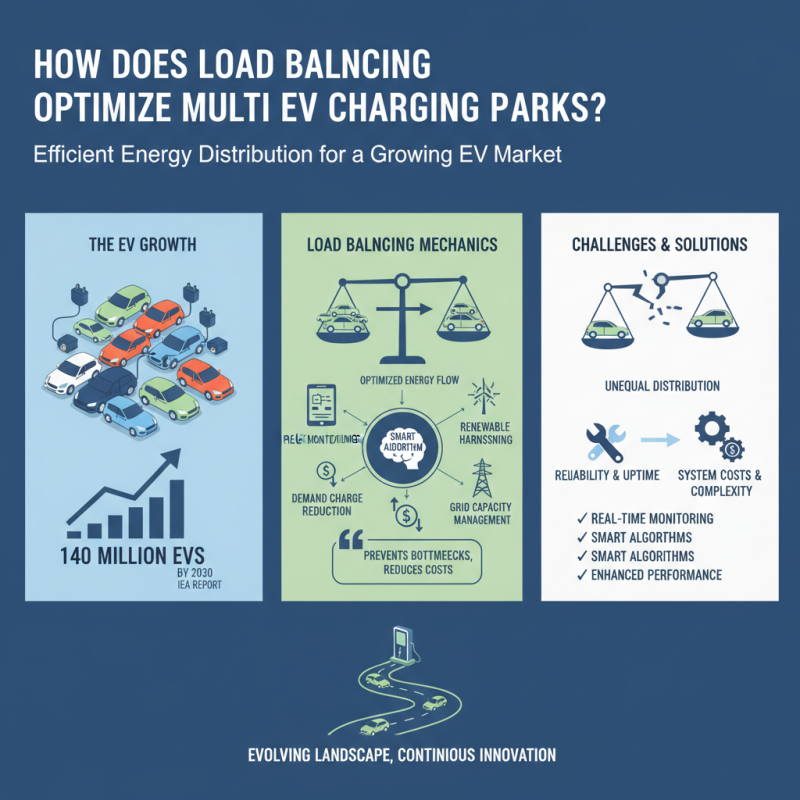
Load balancing plays a crucial role in optimizing electric vehicle (EV) charging parks. It ensures that the available power is distributed evenly among multiple charging stations. This is essential as evidence suggests that charging demand can peak at unexpected times. According to a report by the International Energy Agency (IEA), EV sales are projected to surpass 30 million units globally by 2030, increasing the need for efficient charging solutions.
Implementing effective load balancing mechanisms can significantly reduce infrastructure costs. A study by the U.S. Department of Energy reported that smart load management could lower the demand on the grid by approximately 20%. This not only aids in preventing overloaded systems but also enhances the reliability of power supply. However, challenges remain, especially in real-time data management and integration with existing systems.
Many regions lack the necessary framework to support advanced load balancing strategies. As EV adoption accelerates, the importance of robust software solutions that allow for real-time load sharing becomes evident. Observing best practices from areas with mature charging infrastructure can provide insights. However, the variability in energy consumption remains a key issue, signaling the need for ongoing adjustments and improvements in the strategies employed.
| Charging Park Name | Total Chargers | Available Capacity (kW) | Peak Load (kW) | Load Balancing Efficiency (%) | Average Wait Time (min) |
|---|---|---|---|---|---|
| Urban Charge Park A | 25 | 150 | 100 | 85 | 5 |
| Suburban Charge Park B | 30 | 250 | 180 | 90 | 3 |
| Highway Charge Park C | 20 | 120 | 80 | 75 | 7 |
| Community Charge Park D | 15 | 80 | 50 | 70 | 10 |
| Eco-Friendly Charge Park E | 18 | 200 | 130 | 88 | 4 |
: Load balancing distributes charging loads to prevent any charger from becoming overwhelmed and ensures efficient power delivery.
It prevents bottlenecks, reduces waiting times, and promotes energy efficiency, which reduces operational costs.
Compatibility issues with various EV models may lead to inefficiencies if technology isn't aligned with all systems.
Peak shaving limits power draw during high-demand times, ensuring stability and preventing overloads.
Regular updates ensure optimal performance and address any potential gaps in system efficiency.
It can reduce environmental impact and lower costs while contributing to a more sustainable energy ecosystem.
They help predict demand spikes and dynamically adjust power distribution to keep charging stations stable.
Using smart charging apps can track real-time energy usage and help plan charging sessions effectively.
Keeping an eye on battery health and energy supply conditions can enhance overall load management efforts.
Rapid EV growth and evolving infrastructure require ongoing improvements to maintain effective load balancing solutions.
Load balancing in multi-EV charging parks is a critical technology that optimizes the distribution of energy among multiple charging stations, ensuring efficient utilization of available power. Understanding how load balancing works in multi-EV charging parks involves recognizing its role in enhancing charging efficiency by managing peak loads and minimizing bottlenecks. Implementing effective load balancing strategies can significantly benefit both EV users and operators by providing consistent charging availability while reducing costs associated with energy consumption.
As we look towards the future, advancements in load balancing technology are expected to further improve charging solutions, facilitating seamless integration with renewable energy sources and smart grid technologies. The benefits of load balancing are multifaceted, enhancing user experience while promoting sustainable practices within the EV ecosystem. By prioritizing efficient load management, charging parks can support the growing demand for electric vehicles and contribute to a greener future.

 Rama Charger