Selling an electric vehicle charger in Europe requires more than a CE logo on its enclosure. Manufacturers must identify the rules that apply to the product, document how it meets them, and keep evidence ready for review. The details can change with the charger’s design. A wall-mounted AC unit and a high-power DC station may not share the same assessment needs.
So, What are the mandatory certifications for EV chargers in Europe? In many cases, the answer begins with CE marking and applicable EU legislation, including requirements covering electrical safety and electromagnetic compatibility. RoHS restrictions may also apply. Radio equipment rules become relevant when the charger includes wireless functions. Standards such as EN IEC 61851 and EN IEC 62196 can help demonstrate conformity, but applying a standard is not, by itself, a certification.
A useful compliance review starts with the actual hardware: the rated voltage, connector type, control functions, and communications modules. It also checks technical documentation, risk assessment, test results, and the EU Declaration of Conformity. Small oversights matter. A wireless module, for example, can affect which rules apply.
A named expert quotation needs a verifiable source. None was supplied for this introduction, so attributing invented words would weaken its reliability. Before publication, add a confirmed statement from an EV-charging conformity specialist and verify the person’s name, role, and exact wording. Certification is not a single sticker. It is a documented case for why the charger can be placed on the market.
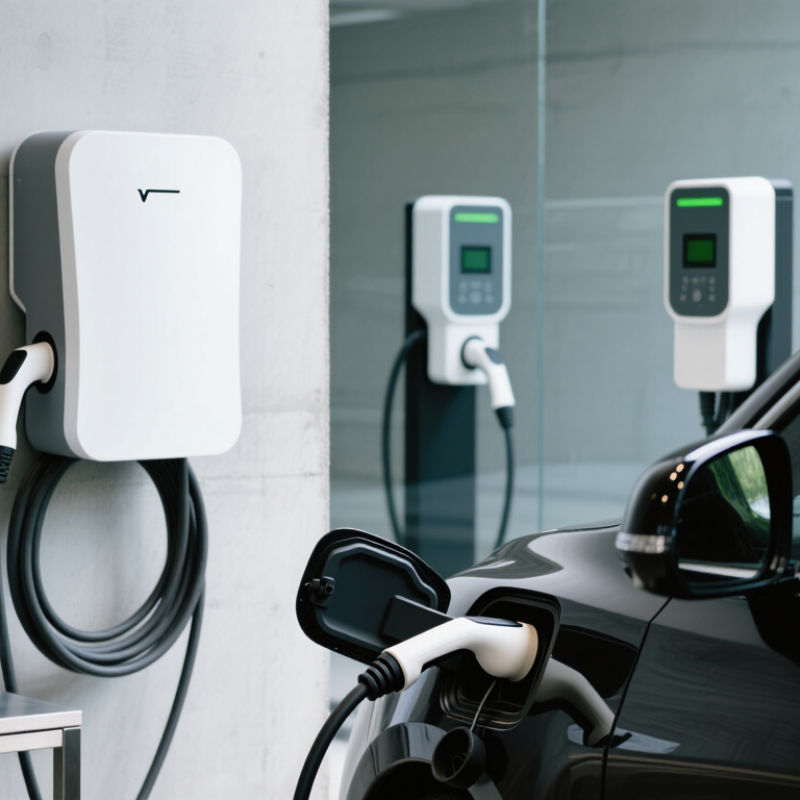
Before evaluating European EV charger certification, define the unit precisely. Is its input single-phase AC, three-phase AC, or DC? Record its rated voltage and maximum output in kilowatts, not just a marketing description. A 7.4 kW single-phase wall unit and a 22 kW three-phase unit need different electrical assessments. Small labels matter. They help determine applicable IEC 61851 tests, including temperature rise, insulation, protective measures, and electromagnetic compatibility.
Then identify the IEC 61851 charging mode. Mode 2 uses a household socket with control and protection in the cable; Mode 3 connects an AC vehicle to dedicated charging equipment. Mode 4 supplies DC through off-board conversion equipment. Mode 1 is also defined, but its use and acceptance can be restricted by local rules.
The mode is not interchangeable with connector type. Check the full charging configuration, including cable, control functions, and rated current.
IEA’s Global EV Outlook 2024 reports that public charging points worldwide exceeded four million in 2023, while fast-charger stock grew by 55%. That growth makes clear classification practical, not clerical.
Still, a label alone proves little; verify the design against the relevant standard edition and destination-market deviations. This step is easy to oversimplify.
Before testing begins, map each EV charger configuration to the EU laws that apply. The Low Voltage Directive, 2014/35/EU, generally covers electrical equipment designed for 50–1,000 volts AC or 75–1,500 volts DC. Check the rated input and output, not just the product label. The EMC Directive, 2014/30/EU, addresses electromagnetic emissions and immunity. A charger must not disrupt nearby equipment, and it should tolerate expected electrical disturbances. Review the installation environment too; a workshop and an outdoor parking area can present different risks.
Does the charger contain Wi-Fi, Bluetooth, or cellular radio? The Radio Equipment Directive, 2014/53/EU, may apply to equipment that intentionally transmits or receives radio waves. RED also sets safety and EMC requirements for radio equipment, so avoid treating the three directives as automatically separate checkboxes. Confirm the product’s functions and intended use, then identify the applicable harmonised standards and conformity assessment route. Keep test reports, design records, risk assessments, and the EU Declaration of Conformity aligned with the final hardware and software. Small changes matter. A radio module added late, or a revised cable layout, can affect test results. Teams sometimes assume one successful test covers every model; that assumption deserves a careful second look.
| EU Legislation | When It Applies to an EV Charger | Main Compliance Requirements | Typical Assessment and Evidence | Relevant Standards or References | Key Application Notes |
|---|---|---|---|---|---|
| Low Voltage Directive (LVD) 2014/35/EU |
Generally applies to electrical equipment designed for use with a rated voltage of 50–1,000 V AC or 75–1,500 V DC. Check the ratings and intended function of the specific charger or equipment. | Equipment must protect people, domestic animals and property from electrical hazards when properly installed, maintained and used as intended. Relevant risks can include electric shock, excessive temperature, fire and mechanical hazards. | Identify hazards and applicable requirements; prepare a technical file and instructions; carry out suitable design verification and tests; issue an EU Declaration of Conformity; affix CE marking. The manufacturer is responsible for conformity. | EN IEC 61851-1 may be relevant to general EV supply equipment safety. Select standards according to the equipment type, design and intended use, and verify their current status in the EU Official Journal. | Where the voltage thresholds are not met, the LVD may not apply; other product-safety obligations can still apply. Radio equipment is subject to the safety objectives of the LVD through RED, without the LVD voltage limits. |
| Electromagnetic Compatibility Directive (EMC) 2014/30/EU |
Generally applies to finished apparatus placed on the EU market that may generate electromagnetic disturbance or whose operation may be affected by such disturbance, unless another EU act governs the relevant EMC requirements. | Emissions must not exceed levels that prevent radio or other equipment from operating as intended. The charger must also have adequate immunity to expected electromagnetic disturbances. | Assess the electromagnetic environment and foreseeable operating conditions; compile technical documentation; perform or justify appropriate emissions and immunity assessments; issue an EU Declaration of Conformity; affix CE marking. | EN IEC 61851-21-2 can be relevant to EMC requirements for off-board EV charging systems. The applicable standards depend on the product configuration, installation and use. | Radio equipment follows RED for its EMC essential requirements rather than being assessed under the EMC Directive for those requirements. A non-radio charger may fall under the EMC Directive. |
| Radio Equipment Directive (RED) 2014/53/EU |
Applies when the charger is radio equipment: equipment that intentionally transmits or receives radio waves for radio communication or radiodetermination. Examples may include models with Wi-Fi, Bluetooth or cellular connectivity. | Radio equipment must meet health and safety requirements, electromagnetic compatibility requirements and requirements for effective and efficient use of radio spectrum. RED also includes additional requirements for certain categories of connected radio equipment. | Determine the radio functions, frequency bands and applicable requirements; assess the product against relevant requirements; prepare technical documentation and an EU Declaration of Conformity; affix CE marking. The conformity-assessment route depends on the standards and requirements used. | Depending on the radio technology and frequency band, standards such as EN 300 328, EN 301 489-1 and EN 301 489-17 may be relevant. Use only standards and editions applicable to the product and listed for RED in the EU Official Journal. | RED covers safety and EMC essential requirements for radio equipment, including safety assessment outside the LVD voltage range. Additional cybersecurity requirements may apply to specified categories of radio equipment; assess the product’s features and applicable EU rules. |
| CE marking and EU Declaration of Conformity Cross-directive obligations |
Applies when the finished product is within the scope of one or more CE-marking EU harmonisation acts, including the directives above. | Meet every applicable act, maintain product identification and traceability, provide required instructions and safety information, and ensure the EU Declaration of Conformity identifies the product and applicable legislation. | Keep the technical documentation and conformity records available for the legally required period. The manufacturer signs the declaration and remains responsible for the product’s conformity. | Use the current consolidated legal texts and the European Commission’s published lists of harmonised standards. | CE marking is generally based on the applicable conformity-assessment procedure; it does not automatically mean that a third-party certificate is required. A notified body is involved only where the applicable procedure requires or permits it. |
Practical note: Applicability depends on the complete product, its electrical ratings, radio functions, intended use and configuration. Confirm the current legal text, harmonised-standard citations and any additional EU requirements for the exact charger before placing it on the market.
How to Meet EV Charger Certification Requirements in Europe?
Match Connectors and Charging Systems to IEC 62196 and IEC 61851 Standards
IEC 62196 covers plugs, sockets, vehicle connectors, and inlets. IEC 61851 addresses conductive charging equipment and its operation. Both matter. A connector can fit a vehicle yet still be unsuitable if the charging system’s electrical controls and protection are not properly assessed. For European public charging, check that AC equipment uses Type 2 and DC equipment uses Combo 2, then verify the exact product configuration against the applicable standard parts and test requirements.
Details count. Mode 3 AC and Mode 4 DC charging require different control and protection arrangements under IEC 61851. Certification reviews should match the tested connector, cable, rated current, and enclosure to the final production unit. Inspect test evidence for insulation, temperature rise, protective bonding, and mechanical durability. A change in cable length or enclosure can affect results. This detail is easy to miss.
The International Energy Agency’s Global EV Outlook 2024 reported more than four million public charging points worldwide at the end of 2023, with the total growing about 40% that year. More equipment makes consistent interoperability checks increasingly important. Treat the report as market context, not proof that any particular charger meets European requirements. Certification scope and national installation rules still need careful review. The paperwork can look complete. It may not cover every configuration.
IEC 62196-2 specifies connector configurations and ratings: Type 1 is rated up to 32 A, while Type 2 ratings include up to 70 A for single-phase and 63 A for three-phase AC. These connector ratings do not by themselves certify a complete charging system. Check the applicable IEC 61851 requirements for the EV supply equipment and its operating mode.
Meeting EV charger requirements in Europe starts with identifying the product’s intended use, electrical design, and applicable EU legislation. Requirements can differ for AC and DC equipment, and wireless functions may add further obligations. Safety testing should examine protective earthing, insulation, dielectric strength, temperature rise, and abnormal operation. Enclosure and ingress tests matter when the design claims protection against dust or water. Small details matter. A loose cable gland, for example, can undermine an otherwise sound enclosure.
EMC testing checks both emissions and immunity. Typical evaluations include conducted and radiated emissions, electrostatic discharge, electrical fast transients, and surge immunity, where applicable. Test conditions should reflect the charger’s configuration, cable length, and operating modes. A risk assessment should document hazards such as electric shock, overheating, foreseeable misuse, and installation errors, then link each risk to design controls or instructions. It may reveal gaps late in development. That is frustrating, but useful.
The CE technical documentation should bring the evidence together: product drawings, key component details, risk assessment, test reports, labels, and user instructions. Keep records traceable to the tested model and software or hardware revisions. The manufacturer prepares the EU Declaration of Conformity and remains responsible for its accuracy; a test report alone does not establish compliance. I would review the file again after design changes, even small ones, because “minor” updates can affect safety or EMC performance.
How to Meet EV Charger Certification Requirements in Europe?
AFIR sets deployment targets for public charging along the TEN-T road network. For light-duty vehicles, charging pools must be available at least every 60 km in each direction on the core network. The 150 kW figure applies to individual charging points, not the pool’s total capacity. By the end of 2025, each pool must provide at least 400 kW overall and include one 150 kW point. By the end of 2027, the targets rise to 600 kW overall and two such points. Check the applicable deadline and road-network classification before planning a site.
Equipment conformity is only part of readiness. Depending on the charger design, assess relevant electrical safety, electromagnetic compatibility, and radio requirements, then retain test results and technical documentation. Confirm that payment access, connector availability, grid capacity, and site permits are also addressed. A compliant charger can still miss deployment targets if the pool layout or total power is wrong. Details matter.
Tips: Map the site against TEN-T routes, measure spacing in both directions, and document each charger’s rated power. Verify the latest AFIR text with a qualified compliance specialist. Keep a buffer for grid delays; I have seen schedules slip for less obvious reasons. We sometimes assume the map is straightforward. It isn’t.
Identify its intended use, electrical design, and applicable EU requirements. AC, DC, and wireless models may need different assessments.
Check protective earthing, insulation, dielectric strength, temperature rise, and abnormal operation. Test enclosure protection when dust or water resistance is claimed. Small details matter.
It checks emissions and immunity, including conducted emissions, radiated emissions, electrostatic discharge, fast transients, and surge immunity where applicable.
Cable length and operating modes can affect test conditions. Record the tested configuration so results can be linked to the correct model.
Include drawings, key component details, risk assessment, test reports, labels, and user instructions. Keep records tied to hardware and software revisions.
No. The manufacturer prepares the EU Declaration of Conformity and remains responsible for its accuracy. I would review the file after design changes, even small ones.
Pools for light-duty vehicles must be available at least every 60 km in each direction. By the end of 2025, each pool needs 400 kW overall and one 150 kW point.
Each pool must provide 600 kW overall and include two 150 kW points. The 150 kW figure applies to individual points, not the pool total.
Review road classification, spacing, rated power, payment access, connectors, grid capacity, and permits. Grid delays can disrupt a schedule; maps can be less straightforward than they look.
Meeting EV charger certification requirements in Europe begins with classifying the product by its power supply, output and IEC 61851 charging mode. This classification helps determine which EU requirements apply. Depending on the charger’s design and features, these may include the Low Voltage Directive (LVD 2014/35/EU), Electromagnetic Compatibility Directive (EMC 2014/30/EU) and Radio Equipment Directive (RED 2014/53/EU). What are the mandatory certifications for EV chargers in Europe? The answer depends on the product’s electrical characteristics and whether it includes radio functions; manufacturers should assess each applicable requirement rather than assume one approval covers every model.
Next, confirm that connectors and charging systems align with relevant IEC 62196 and IEC 61851 standards. Complete the required safety and EMC testing, document the risk assessment, and prepare technical documentation to support CE marking. Separately, review the Alternative Fuels Infrastructure Regulation (AFIR) for deployment obligations, including requirements for charging pools along the TEN-T road network. These infrastructure rules concern public charging rollout and should be considered alongside, not as a replacement for, product conformity assessment.

Rama Charger