Can V2V Charging Serve as a Roadside Assistance Solution?

Time:2026-06-16 Author:Madeline
0%

In an era of rapidly evolving technology, the automotive landscape is shifting towards more interconnected systems. V2V (Vehicle-to-Vehicle) charging stands out as a promising innovation in this transformation. This system allows vehicles to share energy directly, creating potential solutions for various challenges. One significant question arises: Can V2V charging be used as a roadside assistance service?

Imagine a stranded vehicle running low on battery in a remote area. Traditional roadside assistance can take time. With V2V charging, a nearby electric vehicle could provide an emergency energy boost. This concept could redefine convenience on the road. However, some aspects require careful examination. How reliable will this technology be in emergency situations? What are the safety concerns with vehicles sharing power? These questions highlight the complexity of implementing V2V charging as a roadside assistance solution.

While the benefits of V2V charging can be enticing, infrastructure and user acceptance remain hurdles to overcome. As we explore this innovative approach, it's essential to consider its practicality and implications for the future of roadside assistance. This examination could lead to new opportunities for enhancing mobility and support for drivers in need.
Can V2V Charging Serve as a Roadside Assistance Solution?

Understanding Vehicle-to-Vehicle (V2V) Charging Technology

Vehicle-to-Vehicle (V2V) charging technology is emerging as a potential roadside assistance solution. This technology allows electric vehicles to share battery power with each other, enhancing mobility and convenience. According to the International Energy Agency, the global electric vehicle market could reach 145 million by 2030. With more cars on the road, V2V charging could play a crucial role in reducing range anxiety.


Imagine being stranded with a low battery. With V2V charging, a nearby vehicle could boost your battery life. A report from BloombergNEF shows that by 2025, around 15% of new vehicles will offer V2V capabilities. Though promising, challenges remain. Not every vehicle may be compatible, and there’s a need for standardized protocols.


Tips: Always check the battery status before you hit the road. Join community forums for safer traveling. Vehicle owners can also collaborate to establish local charging networks. By doing so, we increase the likelihood of utilizing V2V technology effectively. An engaged community is vital. Exploring shared charging systems would enhance our road safety.

The Role of V2V Charging in Modern Roadside Assistance

The concept of Vehicle-to-Vehicle (V2V) charging is gaining traction in the automotive industry. This technology could significantly enhance modern roadside assistance solutions. According to the International Energy Agency (IEA), electric vehicle (EV) sales have surged and are projected to exceed 30 million globally by 2030. With this rising number of EVs, the demand for efficient roadside assistance strategies must be re-evaluated.


V2V charging allows one EV to transfer energy to another. With it, stranded vehicles could receive an emergency charge from passing EVs. This idea is not without its challenges. How often will drivers be willing to share their battery reserves? Additionally, network reliability is crucial. A 2022 report from McKinsey & Company indicates that over 20% of roadside assistance incidents involve flat batteries. Implementing V2V charging could, in theory, reduce these situations. However, practical usage and consumer acceptance remain uncertain.


Moreover, V2V charging systems must prioritize user experience. Will drivers trust this technology? Concerns about energy loss during transfer persist. There is also the question of compatibility between different EV models. The future of V2V charging as a roadside solution requires further exploration and testing. With consumers and industry stakeholders working together, it may unlock an efficient way to enhance roadside assistance capabilities.

Advantages of Implementing V2V Charging for Vehicle Support

Vehicle-to-Vehicle (V2V) charging presents an innovative approach to roadside assistance. Imagine being stranded with a low battery. V2V charging allows vehicles to share energy directly. This method can be a lifeline for those in need. The experience of providing power from one car to another is empowering. It fosters a sense of community among drivers, promoting solidarity in challenging times.

Implementing V2V charging can enhance vehicle support systems significantly. This technology reduces dependence on charging stations, which can be few in remote areas. Moreover, with increasing electric vehicle adoption, V2V charging can be practical. However, the efficiency of energy transfer varies. Factors such as battery compatibility and distance between vehicles can limit effectiveness. As we explore V2V charging, it’s essential to address these limitations. Enhancements in technology could make it more reliable and effective.

Infrastructure plays a role too. Developing guidelines for safe energy transfer is crucial. While the concept is promising, real-world applications must ensure safety standards. Collaboration between automakers could lead to a robust framework. The potential for V2V charging is vast, yet challenges remain. Engaging with stakeholders can refine this concept further.

Challenges and Limitations of V2V Charging as a Solution

V2V (Vehicle-to-Vehicle) charging has emerged as a potential roadside assistance solution, but it comes with significant challenges. One primary limitation is the inconsistent vehicle compatibility with charging standards. According to the International Energy Agency, only 20% of electric vehicles (EVs) currently support bidirectional charging. This lack of uniformity hinders the widespread adoption of V2V technology.

Another obstacle is the need for robust communication systems between vehicles. If vehicles cannot efficiently exchange data, the reliability of V2V charging diminishes. A study by the National Renewable Energy Laboratory highlighted that connectivity issues could lead to over 30% failure rates in transaction completions during peak hours.

Moreover, the infrastructure required to support this system is not yet in place on a large scale. Many regions lack the necessary roadsides equipped with compatible charging units. The costs associated with upgrading infrastructure remain a barrier. A report from the U.S. Department of Transportation stated that the transition to a functional V2V ecosystem would require billions in investment, prompting concerns about feasibility and return on investment.

Future Prospects of V2V Charging in Roadside Assistance Services

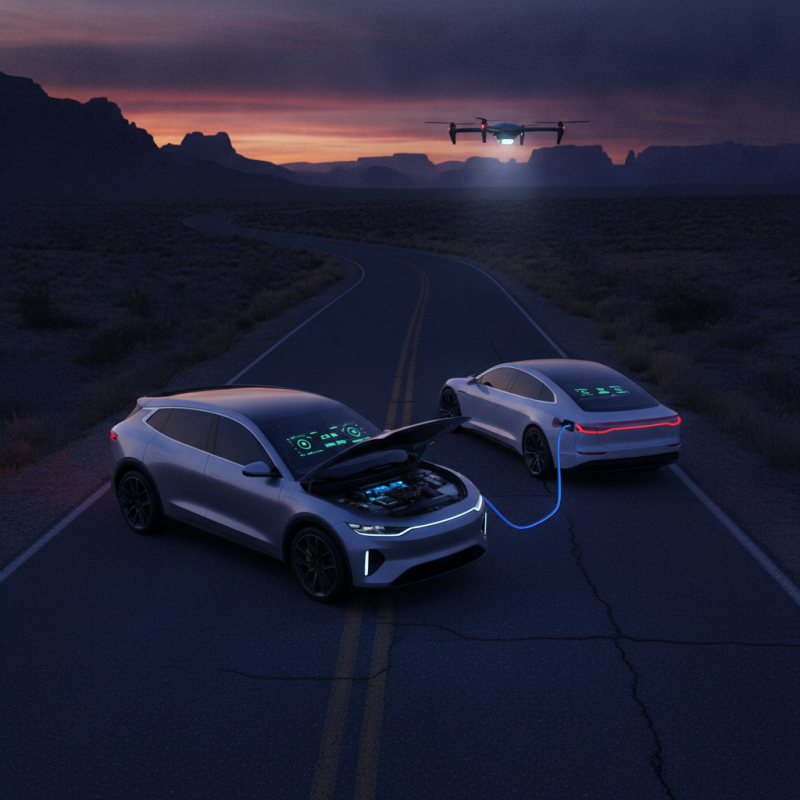
Vehicle-to-Vehicle (V2V) charging presents intriguing prospects for roadside assistance. Imagine two electric vehicles sharing energy during a roadside emergency. This could transform how drivers manage unexpected breakdowns. Instead of waiting for help, drivers can receive energy from neighboring vehicles. This solution could enhance resilience and decrease dependence on fixed charging stations.

The implementation of V2V charging may not be straightforward. Not every vehicle will be equipped for this technology. There are concerns about compatibility and communication between different car models. Additionally, how much energy a vehicle can share is uncertain. It raises questions about battery management and safety. Will drivers be willing to assist others when they struggle with their charge?

While V2V charging offers potential benefits, it requires careful consideration. Regulatory guidelines will need to evolve. The technology’s reliability will determine its success in roadside assistance. Also, public awareness and willingness to adopt this system are crucial. Addressing these issues is essential for realizing the vision of V2V charging as a viable roadside assistance solution.

FAQS

: What is Vehicle-to-Vehicle (V2V) charging technology?

: V2V charging allows electric vehicles to share battery power for emergency boosts, enhancing mobility.

How can V2V charging help stranded drivers?

A nearby vehicle can provide a battery boost, reducing range anxiety during emergencies.

What percentage of new vehicles are expected to have V2V capabilities by 2025?

About 15% of new vehicles may offer V2V charging features by 2025, according to reports.

What challenges do V2V charging systems face?

Compatibility issues and a lack of standardized protocols are major challenges.

Why is consumer trust important for V2V charging?

Drivers need to trust this technology to share battery power, impacting overall acceptance.

How does the current vehicle compatibility affect V2V adoption?

Only 20% of electric vehicles support bidirectional charging, limiting widespread use of V2V technology.

What infrastructure is needed for V2V charging?

Roads must be equipped with compatible charging units, which are currently lacking in many areas.

Can energy loss occur during V2V charging?

Yes, concerns about energy loss during battery transfer can affect driver confidence in the system.

What is the expected investment for V2V infrastructure?

Transitioning to a functional V2V ecosystem could require billions, raising feasibility concerns.

How can communities enhance V2V charging usage?

Establishing local charging networks and engaging in community forums can improve effectiveness and safety.

Conclusion

The article "Can V2V Charging Serve as a Roadside Assistance Solution?" explores the potential of Vehicle-to-Vehicle (V2V) charging technology in enhancing roadside assistance services. V2V charging allows vehicles to share and transfer energy, which can be crucial for providing power to stranded vehicles or those with depleted batteries. This innovative approach not only addresses immediate energy needs but also promotes a sense of community among drivers who can assist one another in times of trouble.

However, while the advantages of implementing V2V charging for vehicle support are promising, including increased accessibility and reduced reliance on traditional charging infrastructure, the article also highlights several challenges and limitations. These include technical barriers, safety concerns, and the need for standardization in V2V systems. Ultimately, the future prospects of V2V charging as a roadside assistance service hinge on overcoming these obstacles, raising the pertinent question: can V2V charging be used as a roadside assistance service? Through ongoing research and development, this technology may redefine how drivers support one another on the road.

Madeline

Madeline

Madeline is a dedicated marketing professional with a wealth of expertise in our company's core offerings. With a keen understanding of the industry, she brings a unique perspective to her role, consistently delivering high-quality content that highlights the superior aspects of our products. As......