Electric vehicles promise cleaner journeys, but their charging source matters. An EV charged from rooftop solar can use sunlight captured at home, reducing dependence on fossil-fuel-heavy electricity. The process feels tangible: photovoltaic panels produce power, an inverter converts it, and a smart charger sends energy to the vehicle battery.
So, What is the most efficient way to solar charge an EV? In most homes, the strongest approach is direct daytime charging. A properly sized solar array should connect with a solar-aware Level 2 charger. The charger can adjust power as clouds pass across the panels. This helps prevent unnecessary grid imports and reduces conversion losses. A home energy-management system can also prioritize household appliances, solar charging, and battery storage.
Mark Z. Jacobson, professor of civil and environmental engineering at Stanford University, has stated, “The sun provides more energy to the Earth in one hour than the world uses in one year.” His observation highlights solar power’s enormous potential, but potential alone does not guarantee efficiency. Panel orientation, cable distance, charger quality, battery temperature, and local sunlight all affect results.
Experience from residential installations shows that charging during bright midday hours often performs best. Yet winter mornings can disappoint. That matters.
A practical system should monitor real-time solar output instead of following a rigid schedule. Homeowners should compare annual energy production, not only peak panel ratings. Professional installation and certified equipment also improve safety and reliability. Solar charging is not perfectly lossless. It is, however, a measurable and increasingly practical path toward lower-emission transportation.
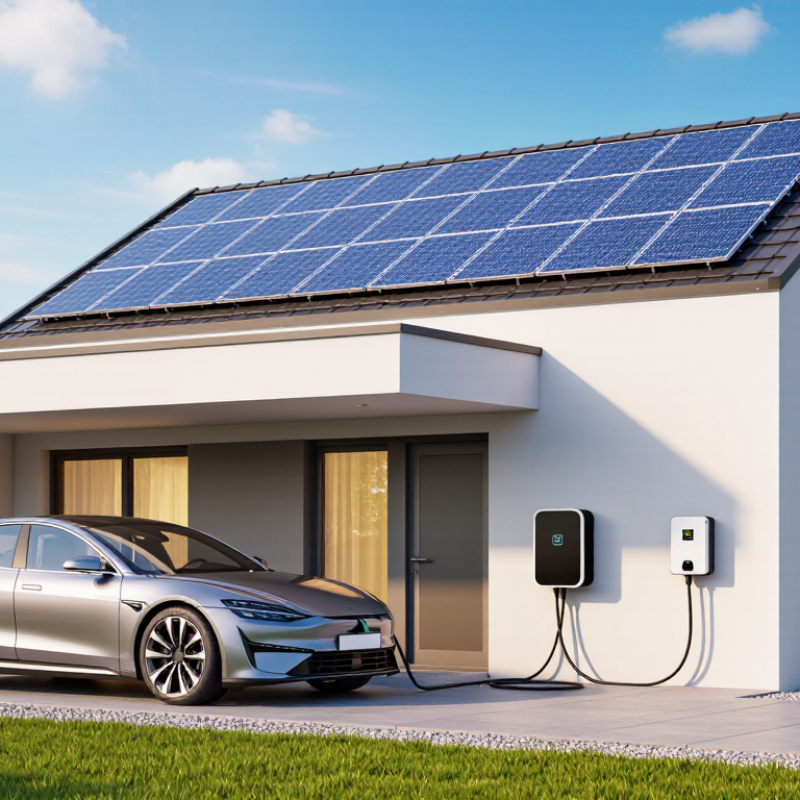
Solar charging turns sunlight into usable electricity for an electric vehicle. Roof or ground-mounted panels generate direct current (DC) when light reaches their cells. An inverter converts that power into alternating current (AC) for household circuits. A dedicated EV charger then manages the transfer into the vehicle. Some systems use a DC charger, reducing conversion steps. The charger communicates with the car before current flows. It checks voltage, temperature, and charging limits. Safety controls stop charging when a fault appears.
During practical installation, energy usually follows one of three paths. It can charge the vehicle immediately, fill a home battery, or flow to the grid. An energy-management controller measures production and household demand in real time. When clouds pass, it adjusts charging power instead of forcing an unstable supply. Sunlight varies. That matters. A sunny midday session may deliver strong power, while evening charging needs stored energy or grid electricity. Panel angle, shading, cable length, and local weather all affect results.
Solar charging feels simple at the socket, but the system behind it is carefully engineered. Qualified installers size the panels, inverter, protection devices, and charger together. They also verify grounding, ventilation, and compliance with local electrical rules. In my view, unrealistic output estimates are often the weak point. A system may produce less during winter, dust, or partial shade. It is not perfect. Monitoring software can reveal these gaps by showing solar generation, charging power, and losses. That data supports safer adjustments and more honest expectations.
Solar charging can reduce EV charging costs by producing electricity at home. Instead of buying every kilowatt-hour from the grid, drivers can use sunlight from their rooftop panels. A sunny afternoon may add useful range while the car sits in the driveway. Over time, this can lower household energy bills, especially where daytime electricity prices are high. The exact savings depend on panel output, local rates, weather, and driving distance.
Tips: Charge during daylight when possible. Track solar production with a home energy monitor. Compare your monthly charging costs before and after installing solar. Keep the panels clean, but follow professional safety guidance. A qualified installer can check roof space, wiring, and expected annual output.
Solar charging is not automatically free. Panels, inverters, permits, maintenance, and installation create upfront costs. Batteries can also increase the budget, although they may store daytime energy for evening charging. In my experience, simple calculations are more useful than optimistic estimates. Review one year of electricity bills and your real driving habits. A smaller system might meet daily needs better than an oversized one. Weather can disappoint. Planning should allow for cloudy weeks and seasonal changes.
Solar-powered EV charging can cut emissions at the point where driving begins. The IPCC’s Sixth Assessment Report estimates solar power at about 48 grams of CO₂-equivalent emissions per kilowatt-hour across its lifecycle. Coal-fired electricity averages about 820 grams. That gap matters when an EV charges beneath a rooftop array at noon, while the panels are producing electricity. The vehicle uses local renewable power instead of relying entirely on fossil-fuel generation. Cleaner charging.
The International Energy Agency reported that electric car sales exceeded 14 million worldwide in 2023. As adoption grows, charging electricity becomes an important environmental factor. Solar generation can also reduce pressure on the grid during sunny daytime hours. However, solar charging is not automatically carbon-free. Panel manufacturing, transport, batteries, and installation create emissions. The IPCC includes these stages in its lifecycle estimates. A poorly oriented array may produce less energy than expected, and evening charging often requires grid electricity. That assumption needs checking. Battery recycling and equipment durability also deserve more attention. Still, pairing charging with well-designed solar generation can deliver lower-carbon miles, especially in regions with coal-heavy grids. The environmental result depends on local sunlight, system efficiency, and how the electricity is managed. Regular performance monitoring makes those claims more reliable.
Solar charging can make an electric vehicle part of a household’s energy system, not just another grid load. The International Energy Agency’s Global EV Outlook 2024 reported more than 14 million electric car sales worldwide in 2023. As adoption grows, uncontrolled charging may increase pressure on local networks. Rooftop solar offers a practical alternative: a vehicle can absorb midday electricity while parked at home, often during peak sunlight.
The benefit is greater energy independence. The IEA’s Renewables 2024 report recorded nearly 400 gigawatts of new solar photovoltaic capacity in 2023, showing how quickly renewable generation is expanding. A home with solar panels, managed charging, and battery storage can produce, store, and use more of its own electricity. During a sunny afternoon, surplus power can fill the vehicle’s battery instead of flowing immediately to the grid. That feels tangible: fewer imported kilowatt-hours and more control over charging costs.
Still, solar charging is not perfectly independent. Cloud cover, winter darkness, limited roof space, and evening driving can reduce direct solar supply. The U.S. Department of Energy states that storage improves solar’s usefulness by shifting electricity into later hours. Real-world monitoring matters more than optimistic estimates. I would check annual production, charging losses, battery capacity, and household demand before sizing a system. A smaller system may be more reliable than an oversized one that rarely operates efficiently.
| Energy Dimension | Solar Charging | Grid-Only Charging | Impact on Energy Independence |
|---|---|---|---|
| Primary Energy Source | On-site sunlight converted into electricity by photovoltaic panels. | Electricity supplied by the local power network, using a changing mix of fuels and renewable sources. | On-site generation reduces dependence on external electricity suppliers and centralized infrastructure. |
| Typical Solar Electricity Yield | Approximately 1,000–1,500 kWh per installed kWp per year, depending on location, orientation, shading, and climate. | No personal generation; electricity availability depends on the network and local generation capacity. | A properly sized system can produce a significant share of an EV’s annual charging energy. |
| Electricity Required for Driving | Most passenger EVs use about 15–25 kWh per 100 km, including normal charging and conversion losses. | The same vehicle energy requirement applies, but all charging electricity is purchased from the grid. | Driving demand can be matched with a predictable amount of annual solar production. |
| Solar Capacity for 10,000 km of Driving | Roughly 1.0–2.5 kWp of solar capacity can produce the required 1,500–2,500 kWh annually in suitable conditions. | No solar capacity is required, but the full annual charging demand remains grid-dependent. | A modest residential solar array can offset much or all of the electricity used for typical annual driving. |
| Lifecycle Carbon Intensity | Utility-scale and rooftop solar commonly fall within approximately 20–50 g CO₂e per kWh over their lifecycle. | Grid electricity can range from about 50 to more than 1,000 g CO₂e per kWh, depending on the generation mix. | Solar charging generally lowers charging-related emissions, especially in carbon-intensive grids. |
| Direct Energy Cost After Installation | The sunlight itself has no fuel cost. Ongoing expenses mainly include maintenance, financing, and eventual equipment replacement. | The driver pays the applicable electricity tariff for every kWh used to charge the vehicle. | Producing electricity at home can reduce exposure to retail electricity price increases. |
| Best Charging Period | During daylight hours, when solar generation is highest. Smart charging can automatically follow solar output. | Any time electricity is available, although prices and emissions may vary by time of day. | Scheduled daytime charging increases self-consumption and reduces the need to import electricity. |
| Energy Storage Option | A home battery can store unused daytime solar electricity for evening or overnight EV charging. Typical lithium-ion round-trip efficiency is about 85–95%. | The grid provides continuous balancing, but the household remains dependent on network availability. | Storage extends solar charging beyond daylight hours and can provide limited backup during outages when the system is designed for backup operation. |
| Potential Solar Contribution to EV Charging | A typical home system may directly supply approximately 20–40% of EV charging demand; higher shares are possible with daytime charging, larger PV systems, and battery storage. | 0% of the electricity is generated on-site unless the household also has a solar system. | The greater the share of self-generated electricity, the less the vehicle depends on purchased energy. |
| Resilience During Power Disruptions | Solar panels alone normally shut down during a grid outage. Solar combined with a compatible battery and backup equipment can continue supplying selected loads. | Charging is normally unavailable during a local outage unless separate backup generation is provided. | A correctly configured solar-plus-storage system can improve household and transport energy resilience. |
| Typical Roof Area Requirement | Approximately 5–10 m² of suitable roof area per kWp, depending on panel efficiency and layout. | No roof area is required for electricity generation. | Available roof space determines how much of the EV’s annual energy demand can be produced on-site. |
| Long-Term Equipment Life | Solar panels commonly have useful service lives of about 25–30 years, while inverters and batteries may require earlier replacement. | The household does not own the generation equipment but remains exposed to future grid infrastructure and tariff changes. | Long equipment lifetimes make solar a durable strategy for reducing long-term charging dependence. |
Solar charging can turn a sunny roof into fuel for daily driving. The real advantage depends on system design, not panels alone. A home assessment should examine roof direction, shade, annual sunlight, and household electricity use. A 7 kW charger may sound impressive. It can exceed a small home's solar output.
Choose a charger that matches the solar array and your vehicle’s charging limits. Smart controls can delay charging until midday, when panels produce more electricity. A battery may store excess energy for evening charging, but it adds cost, space requirements, maintenance, and conversion losses. Without a battery, the grid can fill the gap during cloudy hours. Check electrical capacity, cable distance, weather protection, and local permit requirements with a qualified installer. Safety matters more than speed.
Use real consumption data before deciding. Compare your car’s daily energy needs with winter solar production, not only summer estimates. A simple energy monitor can reveal whether the system serves driving or mostly household appliances. Solar electricity often reduces operating emissions when it replaces carbon-intensive grid power. However, manufacturing panels and batteries also creates environmental impacts. The best setup may be smaller than expected. It may still need a grid connection. Review performance after several months and adjust charging times. That feedback can expose an expensive assumption.
Rooftop panels generate electricity at home. Your vehicle can use that power instead of buying every kilowatt-hour from the grid. A sunny afternoon may add useful range while the car sits outside. Savings depend on sunlight, electricity rates, panel output, and driving distance.
Charge during daylight whenever possible. This matches vehicle charging with panel production. A home energy monitor can show whether the car is using solar electricity. Clouds matter.
No. Panels, wiring, installation, permits, and maintenance create upfront costs. A battery may increase the budget. It can store afternoon electricity for evening charging. Simple calculations are safer than optimistic promises.
Review one year of electricity bills and actual driving habits. Compare monthly charging costs before and after solar installation. Include charging losses, seasonal sunlight, and maintenance expenses. My first estimate might still be wrong.
It can reduce emissions from electricity used for driving. Solar power generally has much lower lifecycle emissions than coal-generated electricity. The difference becomes visible when charging happens beneath panels at noon. Panel manufacturing, transport, and installation still create emissions.
It can reduce dependence on imported grid electricity. Panels, managed charging, and storage let a home produce and use more power locally. During a bright afternoon, surplus electricity may fill the vehicle instead of entering the grid. Complete independence is unlikely.
Cloudy weather, winter darkness, limited roof space, and evening driving can reduce solar supply. A poorly oriented roof may produce less electricity than expected. Grid power may still be necessary after sunset. Cloudy weeks happen.
Not necessarily. A smaller system may match daily driving and household demand more efficiently. Oversized equipment can cost more while producing unused electricity. Check annual output, roof space, battery capacity, and charging needs before deciding.
Track solar production, vehicle charging, household demand, and battery performance. Review the data across sunny, cloudy, and winter periods. Keep panels clean, but follow professional safety guidance. Real measurements are more useful than assumptions.
A qualified installer should inspect roof space, wiring, equipment capacity, and expected annual output. Ask how evening charging will work. Allow for seasonal changes and cloudy periods. Planning can improve, but it will never predict every week.
Solar charging offers a practical and sustainable way to power an electric vehicle by connecting rooftop solar panels to a home charging system. During daylight hours, the panels generate electricity that can be used directly for vehicle charging, while excess energy may be stored in a battery or sent to the grid for later use. This approach can reduce reliance on conventional electricity, lower long-term charging expenses, and make energy costs more predictable. What is the most efficient way to solar charge an EV? In most cases, it is to charge during peak sunlight hours with a properly sized solar array, smart charger, and optional home battery.
Beyond financial savings, solar-powered EV charging can reduce emissions associated with transportation and support cleaner household energy use. It also improves energy independence by allowing homeowners to produce and manage more of their own electricity. When choosing a home solar EV system, important factors include driving habits, roof space, local sunlight, charger speed, battery capacity, installation requirements, and future energy needs.

Rama Charger