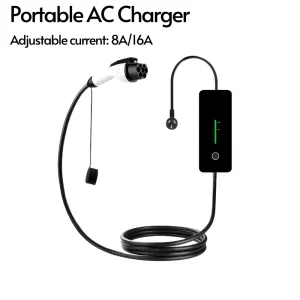
Explore high-performance controllers, charging modules, and testing equipment directly from tier-1 manufacturing lines.
Analyzing global market dynamics, architectural paradigms, and China's pivotal role in Tier-1 energy storage electronics manufacturing.
As the global electrification movement accelerates across automotive sectors, stationary commercial energy storage, and industrial mobility, the demand for high-reliability Battery Management Systems (BMS) has reached an unprecedented peak. Modern electrochemical storage systems—ranging from Lithium Iron Phosphate (LiFePO4/LFP) to Nickel Manganese Cobalt (NMC) chemistries—depend fundamentally on BMS controllers to maintain operational safety, prevent thermal runaway, optimize usable energy capacity, and maximize cycle life. Without precision voltage monitoring, active dynamic cell balancing, and robust State of Charge (SoC) / State of Health (SoH) algorithms, large-scale battery banks are susceptible to catastrophic failure and accelerated degradation.
China has firmly established itself as the global nexus for battery technology development and electronics manufacturing. The integration of advanced silicon fabrication, micro-controller unit (MCU) supply chains, surface mount technology (SMT) infrastructure, and deep hardware-firmware co-design enables leading Chinese OEM/ODM factories to deliver superior performance metrics at unmatched scale. Choosing an elite China BMS factory means tapping into mature hardware ecosystems, automotive-grade ISO 26262 development standards, and rigorous testing protocols including electromagnetic compatibility (EMC), thermal shock, and vibration isolation.
A comprehensive examination of master-slave topologies, sensing precision, balancing strategies, and communication protocols.
For high-voltage electric vehicles and utility-scale ESS, centralized BMS architectures are inadequate. Top-tier factories utilize distributed Master-Slave topologies: BMU (Battery Management Unit) acts as the central intelligence node, interacting with multiple CMUs (Cell Monitoring Units) mounted directly on pack modules. This decouples voltage/temperature measurement noise, enhances modular scalability up to 1500V, and ensures redundancy via isolated CAN Bus or isoSPI interfaces.
While basic systems rely on passive balancing (dissipating excess charge as heat through bleed resistors), high-efficiency Chinese factories implement Inductive & Capacitive Active Balancing. Active systems transfer energy directly from higher-capacity cells to lower-capacity cells during both charge and discharge cycles with efficiencies exceeding 92%, mitigating usable capacity loss and extending overall battery pack lifespan by up to 25%.
Accurate state estimation requires sophisticated algorithmic modeling beyond simple Coulomb Counting. Industrial BMS platforms incorporate Extended Kalman Filtering (EKF) and neural network-driven electrochemical impedance spectroscopy (EIS). This allows real-time compensation for temperature variations, aging degradation, and non-linear open-circuit voltage (OCV) profiles, achieving SOC accuracy within ±1.0%.
Dongguan Rama Charger Technology Co., Ltd. is a technology-driven enterprise integrating R&D, design, manufacturing, sales, and service into a seamless operation. We specialize in providing comprehensive system energy solutions for electric vehicle charging and related applications.
With strong independent R&D capabilities in charging controllers, Rama Charger can provide customized core master control boards for charging pile manufacturers. Over the years, we have established collaborations with numerous leading charging pile enterprises domestically and internationally, delivering outstanding ODM results and tailored solutions.
Our headquarters has obtained multiple authoritative certifications, including DEKRA CB, CE, ISO9001, as well as recognition as a high-tech enterprise and technology SME. We maintain a robust quality management system and AAA credit rating, and have secured 15 software copyrights, multiple invention patents, utility model patents, and design patents, reflecting our commitment to innovation and excellence.
Our complete lifecycle service model guarantees flawless execution from preliminary engineering consultation to field operation support.
Why Tier-1 global OEMs choose Dongguan and Pearl River Delta manufacturing hubs for high-reliability BMS production.
The concentration of raw material processors, semiconductor packaging plants, high-layer PCB fabricators, and automated SMT assembly facilities in Dongguan and Shenzhen enables unprecedented manufacturing speed. What takes months in traditional Western industrial hubs—from initial schematic design to prototype PCB fabrication and automated optical inspection (AOI)—can be executed in days in China's technology clusters.
Key Advantages Include:
Leading China BMS factories adhere to stringent zero-defect quality management frameworks. Before shipping, every BMS master control board undergoes multi-stage validation:
Adapting hardware architecture and software firmware to specialized operational contexts worldwide.
Heavy-duty electric buses, delivery vans, and mining trucks demand BMS controllers capable of handling extreme vibration, wide thermal fluctuation, and continuous fast-charging stress. Our custom controllers feature dual CAN-bus interfaces for seamless interaction with vehicle control units (VCU) and DC fast chargers via GB/T, CCS2, or CHAdeMO protocols.
Containerized energy storage systems rely on multi-tier BMS architectures. Battery pack CMUs aggregate data to rack BMUs, which in turn feed high-level system controllers linked to energy management software (EMS). Support for Modbus TCP, SunSpec, and OCPP 1.6J/2.0.1 allows grid operators to perform peak shaving and frequency regulation securely.
Vehicle-to-Home (V2H) and Vehicle-to-Grid (V2G) bidirectional charging systems bridge mobility and residential energy storage. Our 7kW/11kW/22kW bidirectional inverter controllers utilize specialized BMS firmware to allow electric cars to act as back-up power supplies during grid blackouts without degrading battery health.
Pioneering advancements in AI cloud diagnostic telemetry, wireless communication, and solid-state battery integration.
The traditional standalone BMS is evolving into an integrated Cloud-BMS architecture. By continuously streaming telemetry data (cell voltages, current spikes, temperature gradients) via 5G/IoT gateways to digital twin models in the cloud, AI algorithms can predict micro-short circuits and thermal runaway risks up to 72 hours before they occur. Machine learning models continuously refine individual cell degradation curves, adapting charging parameters dynamically to double battery longevity.
Eliminating heavy, failure-prone wiring harnesses inside battery packs is the ultimate frontier. Next-generation Wireless BMS (wBMS) utilizes 2.4GHz ultra-low latency mesh network protocols to establish wireless communication between individual CMUs and the main BMU. This reduces pack weight by up to 15%, lowers manufacturing assembly complexity, and frees up internal space for higher energy density. Concurrently, specialized control algorithms are being engineered for solid-state batteries, catering to their distinct interface resistance characteristics and swelling pressure metrics.
Clear, expert answers to key questions regarding BMS manufacturing, custom ODM design, and factory selection in China.
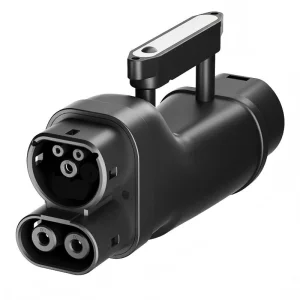
Complete EV charging stations, testing simulators, adapters, and power distribution hardware.
 Rama Charger