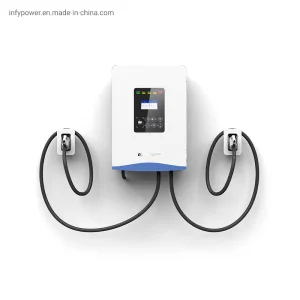
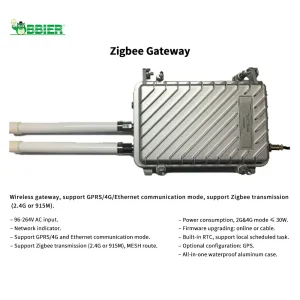
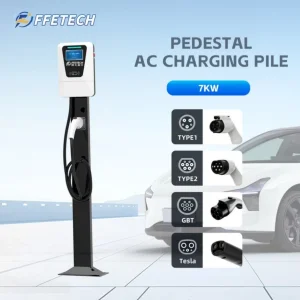
Explore our leading collection of intelligent energy components, testing instruments, and EV bidirectional solutions engineered for global compliance.
Dongguan Rama Charger Technology Co., Ltd. is a leading technology-driven pioneer integrating R&D, custom design, manufacturing, sales, and localized technical support into a unified smart energy framework. We design and deliver comprehensive system energy solutions tailored for electric vehicle charging infrastructure, vehicle-to-grid grid-forming devices, and smart microgrids globally.
With deep vertical integration and independent software-hardware R&D capabilities, Rama Charger engineers custom master control boards and grid-tied systems for globally recognized charging operators. Our state-of-the-art facility adheres to strict global standards, and our operations have been certified by recognized entities including DEKRA CB, CE, and ISO9001.
Recognized as an official High-Tech Enterprise and Technology-focused SME, we operate with a AAA Credit Rating, holding 15 software copyrights along with multiple invention, utility, and design patents that secure our customers' market differentiation.
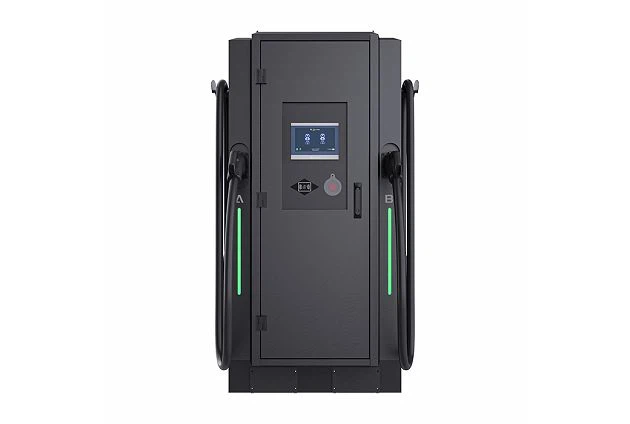
V2G (Vehicle-to-Grid) converts electric vehicles from passive energy consumers into active decentralized power storage assets, resolving power grid volatility.
As intermittent renewable energy penetration (solar and wind) increases worldwide, power transmission networks struggle with grid balancing, peak loading, and thermal limitations. V2G technology represents the optimal buffer mechanism. By leveraging high-capacity EV batteries connected via bidirectional charging units, energy aggregators and utility companies can tap into vast arrays of mobile battery reserves to stabilize localized electrical networks.
During peak load windows, V2G-enabled EVs inject stored capacity back into the local distribution network. This mitigates peak generation strains, curtails grid congestion, and unlocks secondary revenue streams for commercial fleet operators and private EV owners.
V2G chargers act as critical distributed energy resources (DERs) within VPP architectures. Aggregators deploy smart algorithms using OCPP 2.0.1 and ISO 15118 protocols to orchestrate thousands of V2G ports, matching local frequency and grid anomalies in milliseconds.
V2G chargers coordinate local residential and commercial photovoltaic arrays to dump surplus mid-day energy directly into electric vehicles, discharging the excess into buildings (V2H/V2B) during sunset to dramatically reduce grid dependency.
A deep engineering dive into the hardware and software layers that make bidirectional energy flow safe, efficient, and compatible with global distribution systems.
We build our V2G hardware utilizing premium Silicon Carbide (SiC) MOSFET power modules. Compared to traditional silicon IGBTs, SiC topology cuts thermal losses by up to 50%, enabling conversion efficiencies exceeding 96.5% during both charging and discharging cycles. This minimized thermal load directly translates into reduced active cooling demands and longer product life expectancies.
Our V2G systems natively support the ISO 15118 (including -20 for bidirectional power transfer) communication standard, enabling secure Plug & Charge functionality, cryptographic handshake protocols, and dynamic state-of-charge tracking. Combined with the Open Charge Point Protocol (OCPP) 2.0.1, operators gain seamless control over active grid integration parameters.
Safety remains paramount in grid-tied applications. Our bidirectional EVSE controller boards feature integrated utility-grade protection relays, offering high-precision anti-islanding detection, over/under frequency and voltage ride-through, and residual current monitoring, compliant with IEEE 1547 and UL 1741 standards.
The evolution of smart charging progresses from simple off-peak scheduling (V1G) to full V2G integration where the vehicle operates as an active component of the grid. Our R&D roadmap is focused on refining grid-forming inverter capabilities. This ensures future charging hardware can maintain microgrid stability in completely isolated regions without needing a reference voltage from centralized coal or gas-fired utility plants.
Additionally, we are actively implementing local machine learning algorithms at the edge controller level. These modules predict regional grid constraints and price signals locally, shifting energy autonomously without generating heavy back-and-forth cloud API traffic.
Adapting bidirectional hardware interfaces to target-market specific operational conditions, regulatory dynamics, and local power requirements.
European distribution systems utilize a robust three-phase AC infrastructure. For light-duty commercial vehicles and residential setups, we customize three-phase AC V2G wallboxes (supporting ISO 15118-20 AC bidirectional flows). For high-throughput hubs, our DC systems interface smoothly with CE-compliant G99 (UK) and VDE-AR-N 4105 (Germany) grid integration standards.
North American installations rely on split-phase AC power delivery. We provide tailored 240V AC V2H/V2G home chargers that transition seamlessly during power interruptions. Furthermore, our high-power DC systems feature UL 1741 SA/SB grid protection compliance, enabling direct integration into utility demand-response management platforms (DRMS) across the United States.
Transit systems, public municipal fleets, and logistics operations present optimal V2G applications. Because vehicle schedules are predictable, operators can discharge batteries back into the depot grid during high-tariff periods. Our 44kW and high-capacity DC systems are designed specifically to support heavy-duty vehicles using automated ISO 15118 CCS2 or CHAdeMO standards.
Direct access to advanced electronics, precision assembly tooling, robust power electronics ecosystems, and automated testing hubs within China's Silicon Valley.
Operating in Dongguan—the core of global electronics manufacturing—enables Rama Charger to optimize both prototyping speeds and high-volume production pricing. We source high-grade components directly from Tier-1 silicon wafer, transformer, and structural plastics suppliers located within a 50-kilometer radius.
This localized supply chain dramatically reduces transport overhead, insulates manufacturing schedules from geopolitical freight disruptions, and guarantees rapid component lead times. Our testing facilities run advanced automated load simulators to verify board layouts under high thermal loads before shipping, ensuring field reliability that matches premium European and American brands.
We assist global hardware brands, power utilities, and charge-point operators from initial PCB board design to final regulatory certifications.
Every charging station and controller board undergoes strict multi-stage testing to guarantee safe operation on global grids.
Comprehensive factory quality management and operational tracking systems.
Full conformity with European safety directives and DEKRA CB verification schemes.
Hardware circuits built to satisfy IEEE 1547 and UL 1741 safety guidelines.
Multiple utility and software copyrights protecting our custom design layouts.
Answers to common questions regarding deployment, configuration, standards, and safety features.
Our V2G chargers feature configurable state-of-charge (SoC) operating parameters. Grid discharge occurs within the optimal 40% to 80% range, avoiding deep cycles. Modern studies indicate that low-rate smart grid-balancing pulses do not noticeably accelerate lithium battery aging, and can help mitigate passive storage decay.
We support OCPP 1.6J and 2.0.1 for back-office communication, and ISO 15118 (including parts 2 and 20) for EV interface handshakes. On the power grid integration side, our setups are configured to align with standard international codes, including G99 (UK), VDE-AR-N 4105 (Germany), and UL 1741 (North America).
Yes. As a dedicated ODM developer, we provide comprehensive branding, custom enclosure fabrication, specialized color schemes, custom display layouts, and customized charging management software interfaces.
V2H (Vehicle-to-Home) routes vehicle power locally to offset household usage. V2B (Vehicle-to-Building) manages bidirectional flows inside multi-family properties or commercial sites. V2G (Vehicle-to-Grid) involves direct communication and energy exchange with the utility company to provide frequency support and grid stabilization services.
Every charger features comprehensive multi-layer safety protections. These include electronic over-current protection, earth leakage detection, surge suppression, real-time connector temperature sensing, and an automatic anti-islanding relay designed to prevent feeding energy into a down power grid.
Our factory processes conform strictly to ISO9001 guidelines. Every motherboard undergoes automated optical inspection (AOI) and dedicated high-voltage test sequences before final assembly. Completed charging stations undergo full load simulation and thermal burn-in protocols before packing.
Explore our complete ecosystem of smart access control readers, street light controllers, and high-power bidirectional infrastructure systems.
 Rama Charger