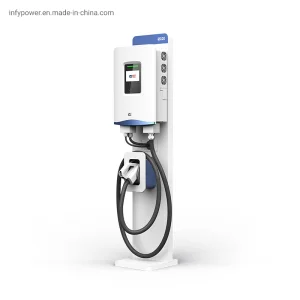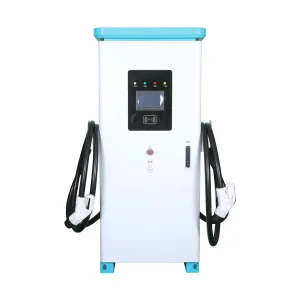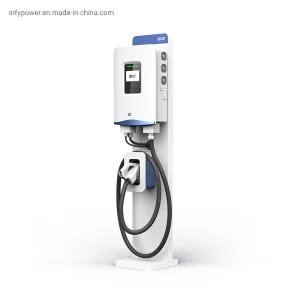
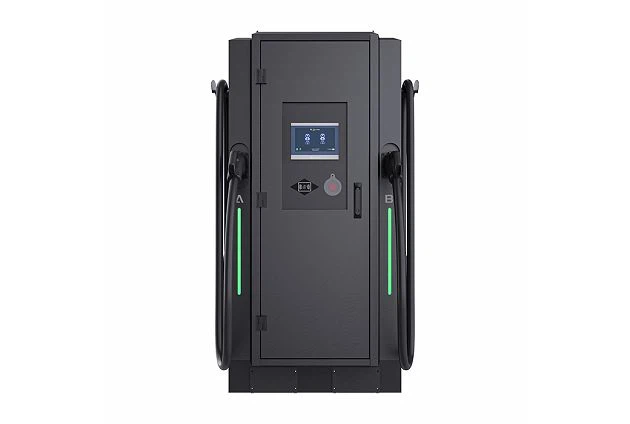
The global transition towards zero-emission fleets and passenger transportation has accelerated the demand for high-capacity, robust infrastructure. Central to this transition is the Multi Standard DC Charger, a flexible technology capable of supporting multiple charging interfaces such as CCS1, CCS2, CHAdeMO, and GB/T. As global markets transition toward unified but regional standards, Charge Point Operators (CPOs) face the massive challenge of integrating hardware that guarantees interoperability without incurring heavy retrofit costs.
Dongguan Rama Charger Technology Co., Ltd. addresses this transition directly. By specializing in customizable master control boards, modular power routing, and robust hardware design, we enable exporters and operators to construct networks capable of serving diverse vehicle brands and configurations, safeguarding capital expenditure (CAPEX) for charging networks worldwide.
Dongguan Rama Charger Technology Co., Ltd.
Dongguan Rama Charger Technology Co., Ltd. is a technology-driven enterprise integrating R&D, design, manufacturing, sales, and service into a seamless operation. We specialize in providing comprehensive system energy solutions for electric vehicle charging and related applications.
With strong independent R&D capabilities in charging controllers, Rama Charger can provide customized core master control boards for charging pile manufacturers. Over the years, we have established collaborations with numerous leading charging pile enterprises domestically and internationally, delivering outstanding ODM results and tailored solutions.
Our headquarters has obtained multiple authoritative certifications, including DEKRA CB, CE, ISO9001, as well as recognition as a high-tech enterprise and technology SME. We maintain a robust quality management system and AAA credit rating, and have secured 15 software copyrights, multiple invention patents, utility model patents, and design patents, reflecting our commitment to innovation and excellence.
Analyzing the supply chain, R&D acceleration, and cost efficiencies driving the global EVSE market.
By producing main controller boards, power conversion modules, liquid-cooled cables, and communication software in one regional hub, Chinese factories like Rama Charger optimize production efficiency and eliminate critical component dependencies.
Continuous validation of hardware prototypes alongside emerging electric vehicles allows engineers to patch communication protocols (such as ISO 15118 and DIN 70121) instantaneously, guaranteeing compatibility with new EV releases.
With established internal compliance pathways, exporters configure charging units to clear strict regional frameworks including European CE certifications, Dekra testing protocols, and compliance configurations for Middle Eastern markets.
High-voltage architectures, bidirectional storage integration, and scalable modular designs.
Vehicles are transforming into mobile energy storage systems (BESS). The transition to V2G capabilities means bidirectional DC chargers operating with protocols such as ISO 15118-20 will dynamically feed power back to grids or homes to balance load demands.
To reduce charge times under 15 minutes, newer vehicle platforms feature 800V architectures. Next-generation Multi Standard DC chargers offer wide output voltage ranges from 150V to 1000V, maintaining compatibility with legacy vehicles and premium luxury EVs.
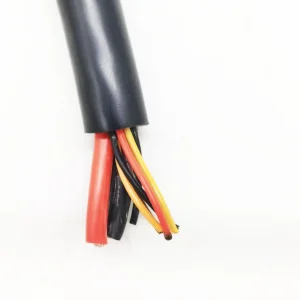
Traditional air cooling meets its limits above 150kW. Modern multi-standard charging dispensers deploy liquid-cooled cables and power module integration, achieving continuous currents of up to 500A without overheating components.
Adapting DC charging technologies to diverse commercial, public, and fleet environments.
The Challenge: Varied vehicle types requiring rapid turnaround times.
The Solution: High-power Multi Standard DC fast chargers (160kW+) equipped with dual CCS2 and CHAdeMO connectors. Integrated load management algorithms balance power distribution based on battery state-of-charge (SoC).
The Challenge: Delivery vans, logistics trucks, and passenger fleets needing overnight charge sequences.
The Solution: Standardized multi-terminal layouts incorporating smart scheduling. Integrating V2G components ensures fleets discharge power to grids during peak utility pricing.
The Challenge: Long dwell-time charging demanding secure access, payment gateways, and safety integration.
The Solution: Low-footprint wall-mounted DC chargers or pedestal setups, featuring RFID authorization, integrated billing via OCPP 1.6/2.0.1, and leakage protection controls.
Technical benchmarks and certifications demanded by international system integrators and distributors.
B2B procurement managers from Europe, North America, and the APAC regions require chargers to meet stringent safety, utility, and networking protocols before purchase authorization:
Compliance with IEC 61851-1 (EV conductive charging systems) and IEC 61851-23 (DC chargers) is standard. In North America, UL 2202 certification governs safety specifications for DC fast charging equipment.
To enable third-party software control, hardware must support OCPP 1.6 JSON at a minimum, with clear upgrade pathways to OCPP 2.0.1 for enhanced cybersecurity and advanced V2G configurations.
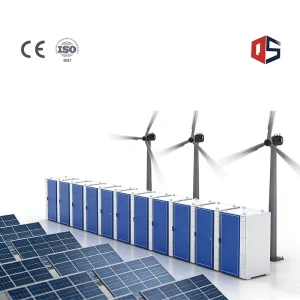
Utilities demand dynamic load balancing capabilities to throttle charging output in real-time when local substations experience excessive load. Integrated energy storage systems act as a critical buffer.
From technical pre-sales consultations to dedicated lifetime post-sales support.
Providing top-tier reliability, compliance, and technological advantages for global buyers.
Customizable master control boards and intelligent charging solutions built around regional standards.
Successful partnerships with leading domestic and international charging enterprises and utilities.
Multiple patents, software copyrights, and certifications (CE, DEKRA CB, ISO9001) that assure safety and longevity.
From pre-sales consulting, technical design alignment, to reliable logistics and post-sales monitoring.
Expert answers to common queries regarding multi-standard DC chargers and system integration.
A Multi-Standard DC Fast Charger integrates multiple vehicle interface types (such as CCS1, CCS2, CHAdeMO, and GB/T) into a single system dispenser. It is highly preferred because it permits CPOs to service all electric vehicles regardless of their geographical origin or connector type. This maximizes charger utilization rates, shortens ROI cycles, and simplifies site-level electric infrastructure.
Bidirectional charging (Vehicle-to-Grid and Vehicle-to-Home) enables a two-way electrical flow between the EV battery pack and the local power system. Using standard protocols like ISO 15118-20, the charger discharges vehicle power to the grid during hours of high demand, reducing stress on electric infrastructures. Alternatively, in V2H applications, it powers residential loads during outages or peak tariff periods.
For European markets, CE certification (via LVD, EMCD, and RED directives) is mandatory, along with RoHS compliance and DEKRA CB schemes. Additionally, compliance with OCPP communication protocols and local measurement regulations (e.g., German Eichrecht calibration compliance) is often required. For North American exports, UL 2202 and UL 2594 testing standards, as well as FCC Part 15 compliance, must be verified.
Yes. Rama Charger possesses independent R&D capabilities in charging pile controllers and software stack creation. We deliver fully customized core master control boards to other charging station manufacturers, enabling local assembly of systems while ensuring the firmware, safety interlocks, and network communications meet international benchmarks.
 Rama Charger