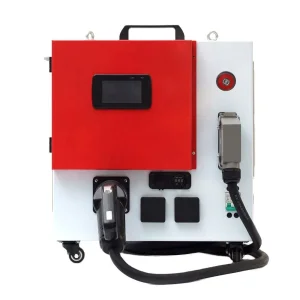
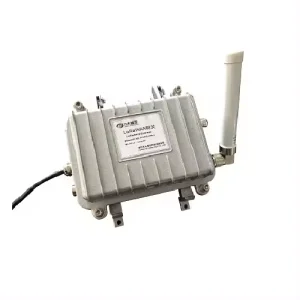
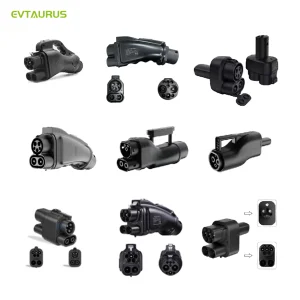
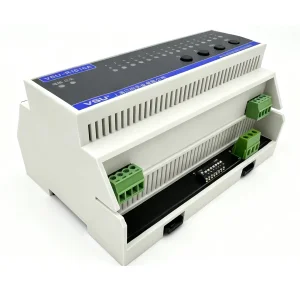
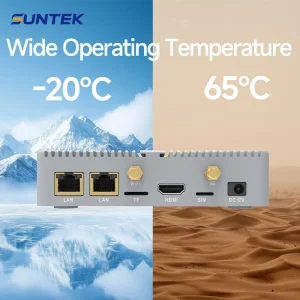
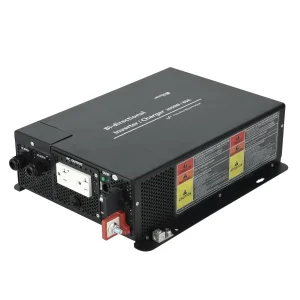
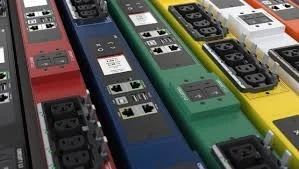
High-performance charging modules, grid controllers, and IoT gateways designed for complex V2X architectures.
Dongguan Rama Charger Technology Co., Ltd. is a technology-driven enterprise integrating R&D, design, manufacturing, sales, and service into a seamless operation. We specialize in providing comprehensive system energy solutions for electric vehicle charging and related applications.
With strong independent R&D capabilities in charging controllers, Rama Charger can provide customized core master control boards for charging pile manufacturers. Over the years, we have established collaborations with numerous leading charging pile enterprises domestically and internationally, delivering outstanding ODM results and tailored solutions.
Our headquarters has obtained multiple authoritative certifications, including DEKRA CB, CE, ISO9001, as well as recognition as a high-tech enterprise and technology SME. We maintain a robust quality management system and AAA credit rating, and have secured 15 software copyrights, multiple invention patents, utility model patents, and design patents, reflecting our commitment to innovation and excellence.

Why global EVSE brands, network operators, and virtual power plant (VPP) developers source bidirectional infrastructure from Dongguan.
Leveraging China's world-leading silicon carbide (SiC) and gallium nitride (GaN) supply chains, our bidirectional wallboxes achieve thermal efficiencies exceeding 96.5%. This minimizes conversion loss during V2G (Vehicle-to-Grid) and V2H (Vehicle-to-Home) discharging operations.
Fully integrated with ISO 15118-20 (Plug & Charge) and OCPP 2.0.1 protocols. Our hardware guarantees seamless handshake interoperability between diverse vehicle platforms (CCS1, CCS2, CHAdeMO, and GBT) and central management networks.
Equipped with microsecond-level active anti-islanding protection (compliant with IEEE 1547 and UL 1741 standards), ensuring absolute operator safety during unexpected grid drops or emergency grid balancing actions.
Adapting bidirectional technology to meet residential, commercial, utility, and municipal infrastructures.
Transforming electric vehicles into home battery packs. Integrates with residential PV solar layouts to dynamically shift loads during peak tariff periods and provide reliable backup power during blackouts.
Enables logistics operators to offset charging costs by discharging excess fleet energy back to the industrial hub, minimizing maximum demand charges (peak shaving).
Allows utilities to aggregate distributed EV batteries to feed energy into the national transmission grid, supporting grid frequency stability and local grid capacity.
How we partner with charging brands from initial conceptualization to deployment and firmware configuration.
Technical consultations covering power conversion topology, standards alignment (CCS, CHAdeMO, NACS, GB/T), global grid codes, and commercial logistics frameworks (FOB, CIF, DDP).
Robust order tracking, precise bill-of-materials (BOM) management, custom layout optimization, commissioning assistance, and coordination of localized safety certifications.
Structured 1–3 year hardware warranties, 24/7 level-3 technical support escalations, secure component distribution pipelines, and continuous OTA firmware security updates.
An authoritative analysis on where electric mobility and grid architectures will converge by 2026.
As global automakers phase out older communication layers, native ISO 15118-20 compatibility is becoming mandatory for smart grid integrations.
Transitioning from traditional silicon IGBTs to Silicon Carbide (SiC) MOSFETs allows designers to shrink wallbox dimensions while increasing heat dissipation efficiency.
The North American charging landscape's pivot to the NACS standard requires bidirectional systems to run native physical handshakes without adapters.
Modern bidenders require fast-response sub-second hardware controllers to match micro-grid utility fluctuations in real-time.
Crucial insights for technical buyers, procurement teams, and system engineers.
Commercial-grade PDUs, test instrumentation, and high-voltage vehicle connectivity systems.
 Rama Charger