Premium quality vehicle charger adapters, high-power liquid-cooled cables, and smart electrical interfaces manufactured to international automotive standards.
Wireless Power Transfer (WPT) for Electric Vehicles represents the frontier of modern transport electrification. By replacing physical plugs and liquid-cooled cables with resonant magnetic induction, wireless EV charging pads offer a hands-free, weatherproof, and highly reliable charging experience. This technology is engineered around the principle of Inductive Power Transfer (IPT), where a ground transmitter pad (connected to the grid) transfers energy across an air gap to a receiver pad installed under the vehicle chassis.
For fleet operators, private EV owners, and municipal transport authorities, the advantages extend far beyond convenience. Wireless systems eliminate wear-and-tear associated with physical connectors, minimize risks of vandalism, reduce spatial footprints in urban parking structures, and provide a critical link in the path toward fully autonomous valet parking (AVP) and self-driving fleet operations.
Dongguan Rama Charger Technology Co., Ltd. - Empowering Smart Charging Infrastructures Globally
Dongguan Rama Charger Technology Co., Ltd. is a technology-driven enterprise integrating R&D, design, manufacturing, sales, and service into a seamless, high-efficiency operation. We specialize in providing comprehensive system energy solutions for electric vehicle charging and related industrial applications.
With strong independent R&D capabilities in charging controllers, power conversion modules, and safety monitors, Rama Charger provides customized core master control boards for charging pile manufacturers and WPT system integrators worldwide. Over the years, we have established robust collaborations with numerous leading charging pile enterprises domestically and internationally, delivering outstanding ODM results and customized technical solutions.
Our manufacturing and engineering headquarters have secured multiple authoritative certifications, including DEKRA CB, CE, and ISO9001. We are honored to be officially recognized as a High-Tech Enterprise and a Technology SME in China. We maintain a strict quality management system and a AAA credit rating, backed by 15 software copyrights, multiple invention patents, utility model patents, and design patents. These achievements reflect our enduring commitment to technological innovation and supply reliability.
Adapting wireless power delivery systems to diverse urban, residential, and commercial environments.
Integration within private driveways and underground residential spaces. Eliminates cable clutter, saves floor space, and leverages automated vehicle detection (LOD/FOD) to trigger automated overnight charging safely away from children and domestic pets.
Tailored for last-mile delivery vans, logistic depots, and automated guided vehicles (AGVs). Charging pads embedded in docking bays allow vehicles to "micro-charge" automatically while loading and unloading goods, extending overall daily range.
As self-driving software advances, vehicles must charge without human intervention. Wireless ground pads interact with vehicle localization systems (UWB/LiDAR) to guide and automatically park cars precisely over target coils.
Tracking the migration from static wireless charging to high-frequency dynamic systems.
The development of wireless electric vehicle charging systems is charting a clear transition path from stationary overnight charging solutions to complex dynamic systems integrated directly into public roadways.
| Phase | Power Output Class | Target Standard / Technology | Primary Application |
|---|---|---|---|
| Phase 1: Static WPT (Current) | 3.7 kW - 11 kW (WPT 1-3) | SAE J2954, ISO 19363, GB/T 38775 | Residential homes, overnight office parkings, private vehicle garages. |
| Phase 2: Semi-Dynamic & AVP (1-3 Years) | 11 kW - 22 kW (WPT 4) | Automated alignment interfaces, Resonant Coupling | Taxi stands, bus passenger loading bays, urban curbside parking zones. |
| Phase 3: Dynamic Roadway WPT (3-5 Years) | 50 kW - 100 kW+ | In-motion power transfer, localized segment excitation | Electrified highways, autonomous trucking corridors, airport transit shuttles. |
A crucial challenge of inductive energy transfer is ensuring the air gap remains clear of conductive debris. Rama Charger’s technology path integrates state-of-the-art Foreign Object Detection (FOD) and Living Object Detection (LOD) systems. Our pads deploy multi-frequency coil arrays and thermal image models to instantly shut down charging when metals (such as aluminum foil, coins, or tin cans) or small animals are detected within the magnetic field, avoiding overheating and maintaining maximum system safety.
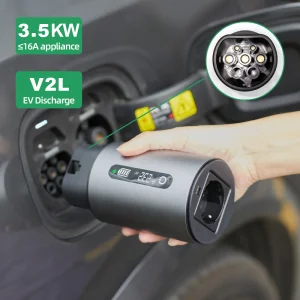
Future development will see wireless pads participating actively in Vehicle-to-Grid (V2G) applications. By utilizing bidirectional converters within the vehicle controller and ground side controller, vehicles parked over pads can automatically feed energy back into the microgrid during peak hours, creating a decentralized grid balancing mechanism without requiring operators to handle plugs or wires.
As a leading supplier headquartered in Dongguan—the global epicenter of high-end electronics manufacturing—Rama Charger leverages deep supply chain integration to provide exceptional performance-to-cost ratios. The production of wireless charging systems requires highly specialized materials, including low-loss Litz wires, high-permeability ferrite cores, and complex automotive-grade power modules (IGBTs/SiC).
Our geographic location allows us to source high-frequency magnetic materials and structural alloys locally within a 50-mile radius, minimizing logistics overheads and lead times. By employing advanced CNC winding machines, robotic potting for IP67/IP69K sealing, and automated test bays, we guarantee structural integrity and coil matching parameters. This high-density cluster of sub-assembly suppliers enables us to scale production rapidly to meet sudden changes in commercial project demand.
Analyzing standard harmonization, market barriers, and deployment rates across major regions.
The global market for wireless EV charging is moving from research prototypes to wide-scale commercialization. Industry standards have unified under international bodies to ensure cross-brand interoperability. Ground pad designs must align with vehicle-side receivers regardless of the car manufacturer. Today, systems conform to the SAE J2954 guidelines in North America, the ISO 19363 / IEC 61980 frameworks in Europe, and the GB/T 38775 standard in China.
Commercial deployment is ramping up rapidly in transit systems and premium passenger car markets. Several automotive OEMs have integrated factory-installed wireless charging receivers in luxury sedan classes. Municipalities are backing WPT implementation to support green emission zones where dangling cables present safety hazards or disrupt city aesthetics. Industry reports project the WPT market to experience a compound annual growth rate (CAGR) exceeding 35% through 2030, driven by the expansion of urban electric bus networks and autonomous ride-hailing structures.
Providing seamless pre-sales, in-sales, and after-sales support globally.
Ensuring grid compatibility and regulatory compliance across international markets.
Deploying high-power charging equipment in international markets requires rigorous alignment with local standards. Every region possesses unique electrical parameters (varying nominal grid voltages, frequency tolerances, grounding schemes) and distinct compliance frameworks. At Rama Charger, our engineers conduct deep grid audits and testing profiles prior to factory exit to guarantee compliance with regional grid authorities.
Crucially, wireless charging relies on magnetic field excitation, meaning it must strictly adhere to electromagnetic interference (EMI) limits and radiation safety thresholds. Our hardware designs conform to the exposure requirements stipulated by the ICNIRP (International Commission on Non-Ionizing Radiation Protection), ensuring the surrounding stray magnetic field remains safely below limits for humans, cardiac pacemaker wearers, and domestic pets. Furthermore, our systems meet FCC Part 15 / CISPR 11 radio interference class limits, preventing interference with close-range communications or smart home networks.
Addressing the core technical, logistical, and safety queries concerning Wireless EV Charging Pads.
Explore our premium system energy products, simulator units, and bidirectional wallbox platforms.
 Rama Charger