Direct access to our certified products, adaptive interfaces, and power systems.
Dongguan Rama Charger Technology Co., Ltd. leads the technological edge in high-power charging architectures.
As electric vehicle battery capacities scale and ultra-fast charging demand surges, traditional integrated DC fast chargers face spatial, thermal, and distribution efficiency bottlenecks. Dongguan Rama Charger Technology Co., Ltd. answers these challenges through a unified design approach, seamlessly integrating R&D, design, manufacturing, sales, and service into a comprehensive ecosystem.
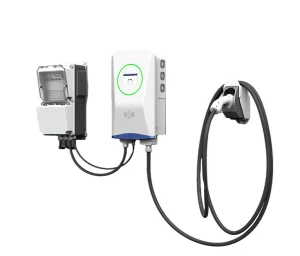
By specializing in split-type DC charging architectures, we deliver centralized power matrix configurations that decouple the heavy conversion units from user terminals (dispensers). This strategic configuration scales efficiently, reduces site deployment overhead, and guarantees robust thermal dynamics under high duty-cycle operations.
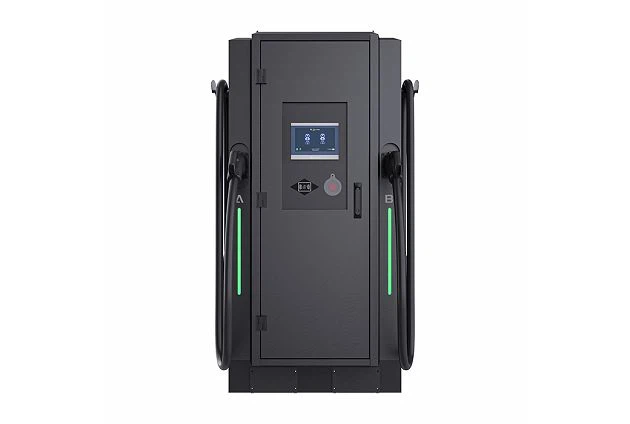
Analyzing the shift from standalone monolithic chargers to distributed split-type DC charging architecture.
Modern networks demand scalable charging. Split-type configurations enable dynamic matrix reallocation, routing power modules in real-time (e.g., in 30kW increments) to vehicles matching their instant State of Charge (SoC).
By moving noisy, heavy, and hot rectifiers to a centralized enclosure located up to 100 meters away, parking areas receive quiet, ultra-slim, and light user dispensers. This configuration simplifies liquid cooling deployments.
In a split-type system, if a single power module experiences a hardware fault, the master system automatically bypasses the module, directing secondary power to the dispenser. Site downtime is virtually eliminated.
| Feature Parameter | Monolithic All-in-One DC Chargers | Rama Charger Split-Type DC Systems |
|---|---|---|
| Power Matrix Scalability | Fixed power limits (e.g. 120kW or 180kW). Cannot scale. | Modular upgrades up to 480kW - 720kW+ per unit. |
| Maintenance Cost | High. Require complete shutdown for internal hardware fixes. | Low. Modular swap out of centralized power units without interrupting user dispensers. |
| User Dispenser Footprint | Large, heavy footprint limits driveway spatial layout. | Ultrathin, space-saving layout. Integrates with liquid-cooled cables. |
| Dynamic Module Routing | Limited dual-port split (e.g. 50/50 division). | Granular matrix control based on vehicle real-time charging curves. |
Addressing grid capacity limits, compliance constraints, and installation guidelines for CPOs.
Rama Charger is certified under international standards to assure reliable operations.
Meets complete Low Voltage Directive (LVD) and Electromagnetic Compatibility (EMC) standards to certify safety across European Union corridors.
Our complete system energy manufacturing plant complies with international standards from structural engineering down to PCB soldering verification.
Provides validation certificates for streamlined global approvals, enabling fast-tracked registration with national agencies worldwide.
Providing structural, firmware, and layout engineering support through our dedicated service teams.
Looking forward into high-power liquid cooling, smart V2G energy feedback, and next-generation charging topologies.
As electric trucks and commercial buses scale, high-voltage systems demand over 1,000V. Rama Charger is currently engineering split-type systems featuring liquid-cooled cable terminals that handle up to 600A continuously. This setup maintains safe temperatures and reduces dispenser cable weight for improved user accessibility.
Dynamic energy rates are shifting chargers into grid balancing assets. Our R&D team designs bidirectional core controller cards, enabling fleets to dump stored battery power back to municipal microgrids during peak demand. This design turns charging infrastructure into a revenue-generating asset.
Addressing key questions on engineering standards, certifications, and split-type DC charger configuration.
Split-type systems separate the power rectification modules from the user charging dispenser. This configuration decreases dispenser weight and size, reduces operational noise at the point of charge, and simplifies upkeep by housing the power electronics indoors or within a central weatherized enclosure. Additionally, it enables dynamic power sharing across multiple charging stalls.
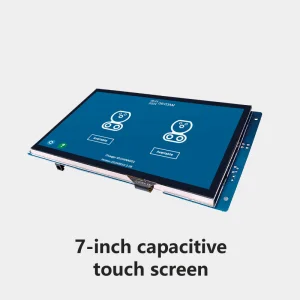
We provide full design services, allowing clients to configure communication protocols (OCPP 1.6/2.0), customized connector options (NACS, CCS1, CCS2, GBT), and tailored touch screen display user interfaces. Clients receive custom schematics and firmware configurations optimized for their physical station layouts.
Yes. Our systems are certified under the CE directive and have passed tests in DEKRA laboratories under the CB scheme, confirming compliance with safety standards including IEC/EN 61851-1 and IEC/EN 61851-23.
Explore our distribution units, conversion modules, adapters, and training systems.
 Rama Charger